← All guides

How to run an affiliate program for a beauty brand (2026)

June 5, 2026 · 6 min read

Beauty already runs on recommendations — tutorials, GRWM videos, before-and-afters, honest reviews. An affiliate program simply formalizes what your customers and creators are doing anyway, and rewards them for it. Done well, it's one of the highest-ROI channels a beauty brand has.

Why beauty is built for affiliates

  • Intensely visual and social — content sells the product better than any ad.
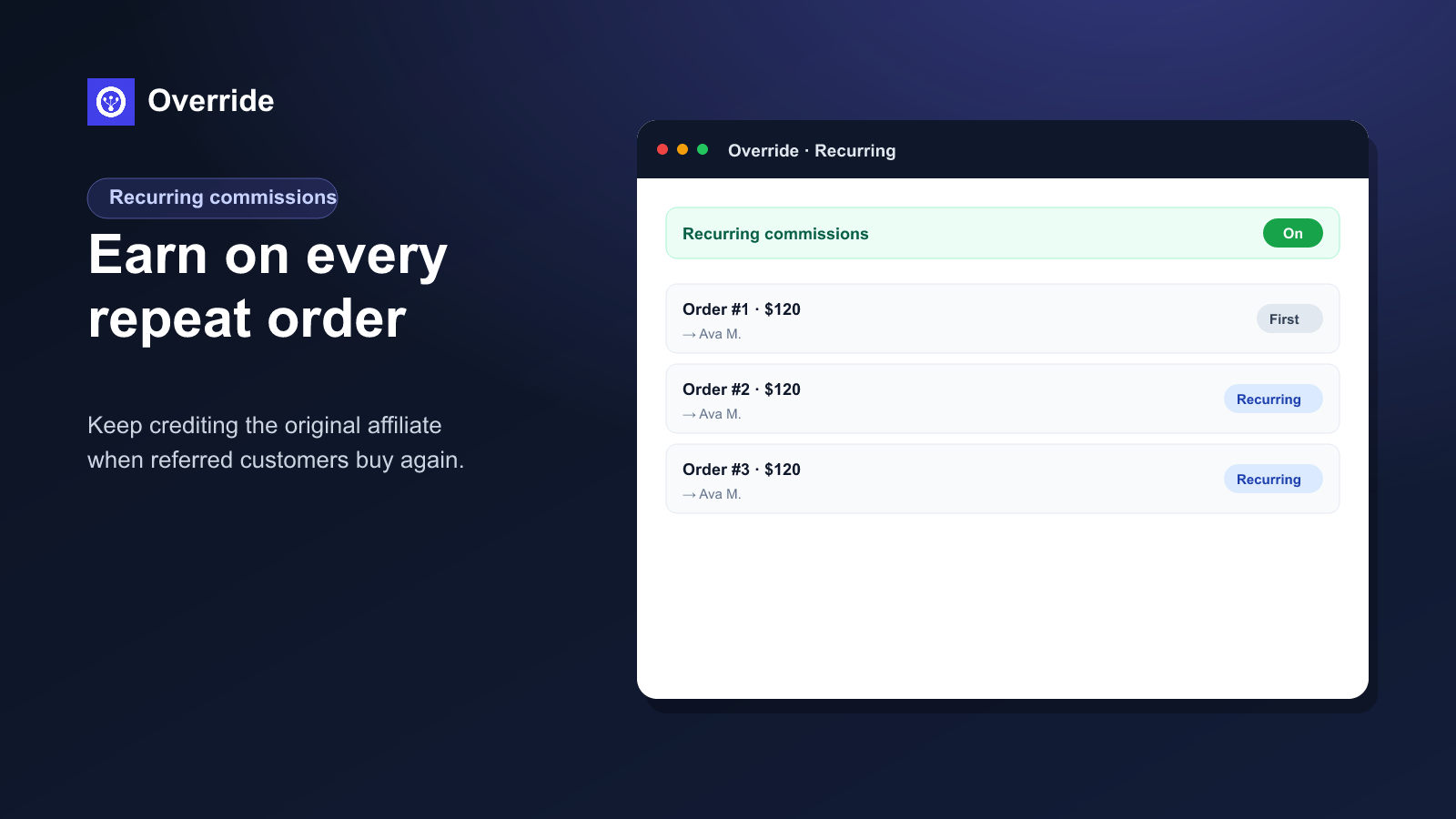
  • High repeat purchase — refills, full routines, new shades and launches.
  • Creator trust drives conversion, from nano-influencers to established artists.
  • An endless content format library: tutorials, hauls, routines, reviews.

Recommended structure

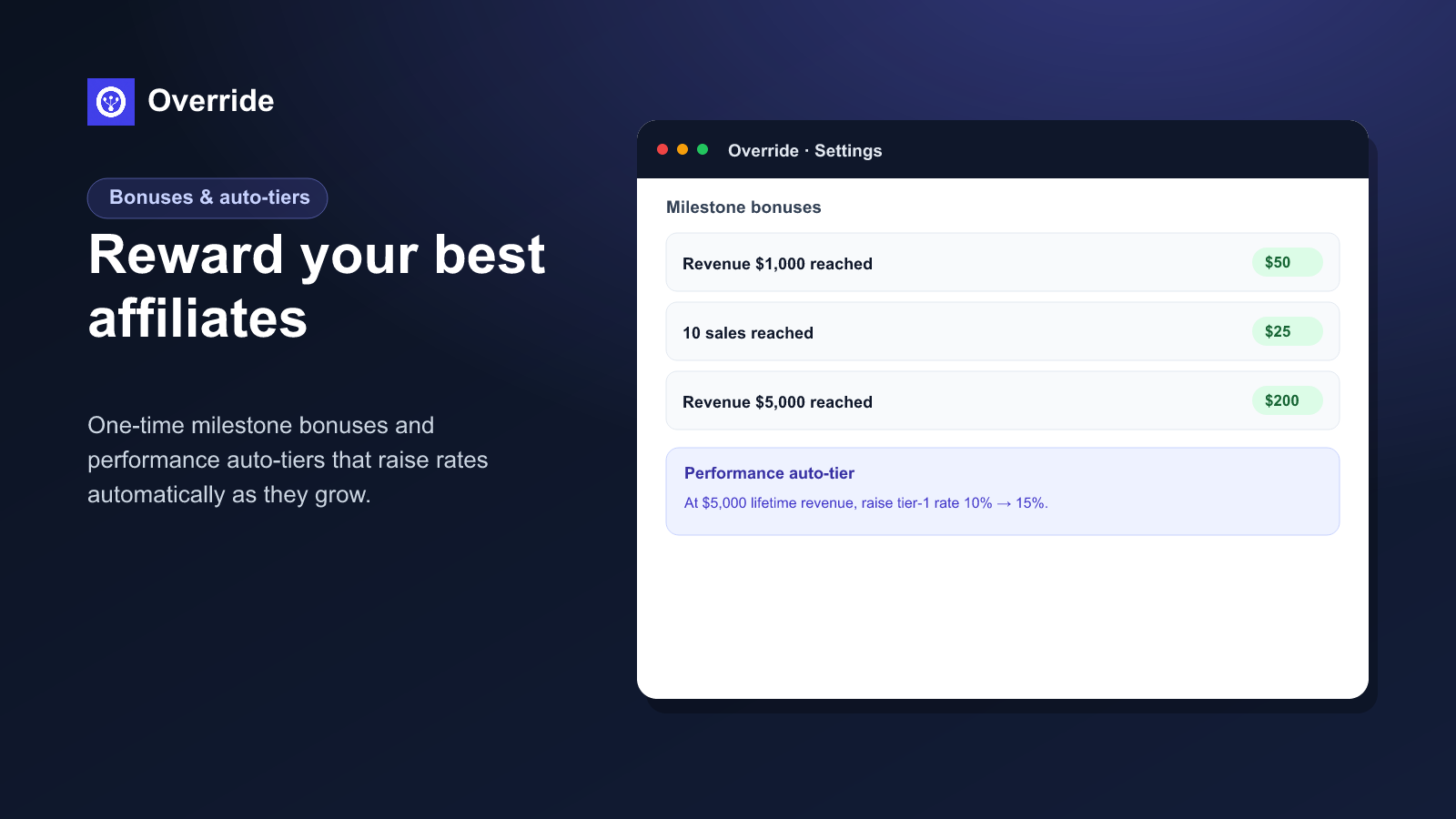
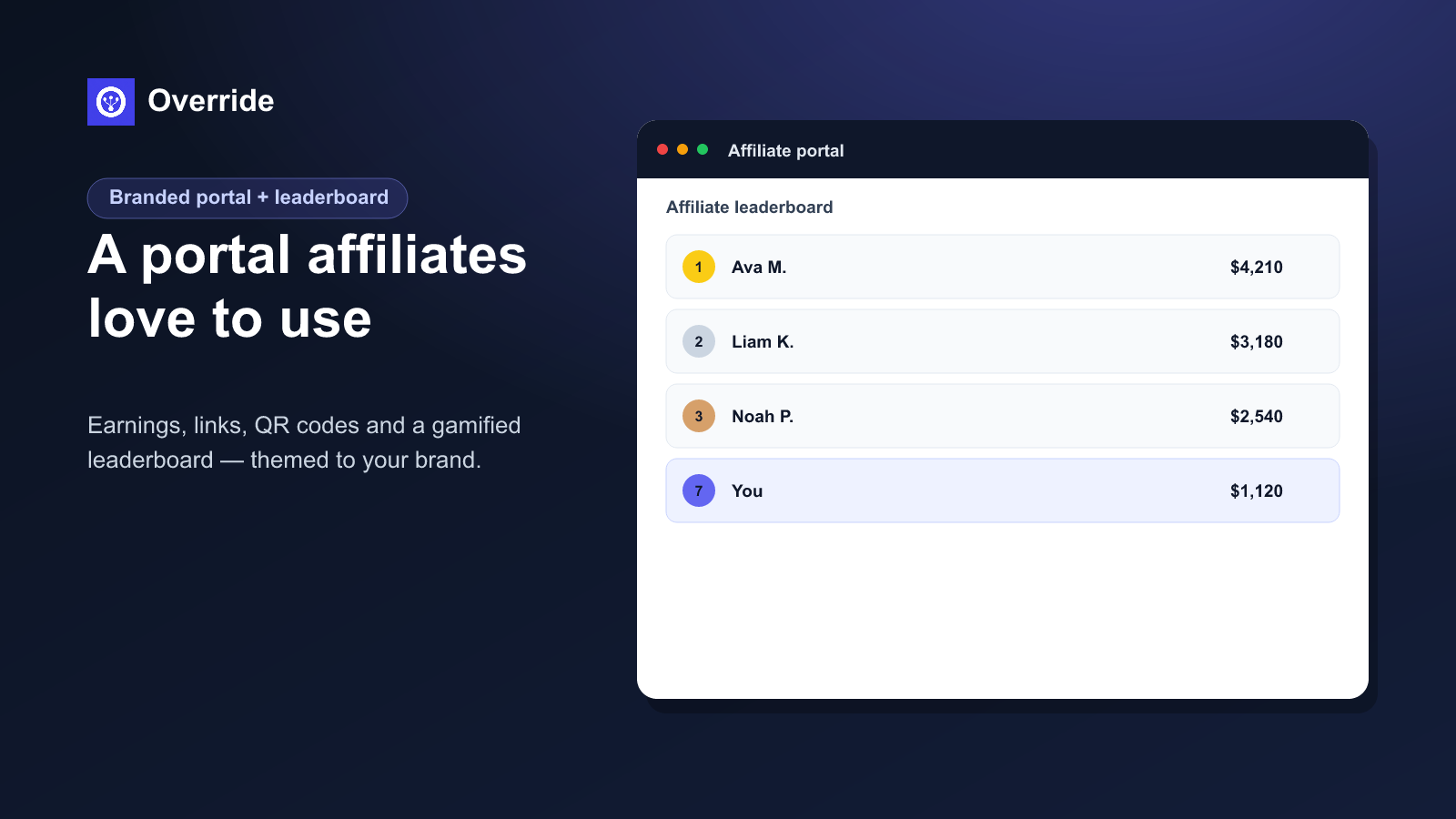
Start around 15% direct + a 5% sponsor override. Because beauty is so creator-led, lean on performance auto-tiers — let a creator's rate step up once they pass a sales milestone, so your VIP partners earn more automatically and have a reason to keep pushing. A leaderboard taps the natural competitiveness of the creator community.

Recruit creators — and turn customers into them

Micro and nano-influencers in your aesthetic often out-convert big names because their audiences trust them. But don't overlook your own customers: a post-purchase invite and an on-site "Become an affiliate" block turn happy buyers into a steady stream of authentic promoters.

Give them content that converts

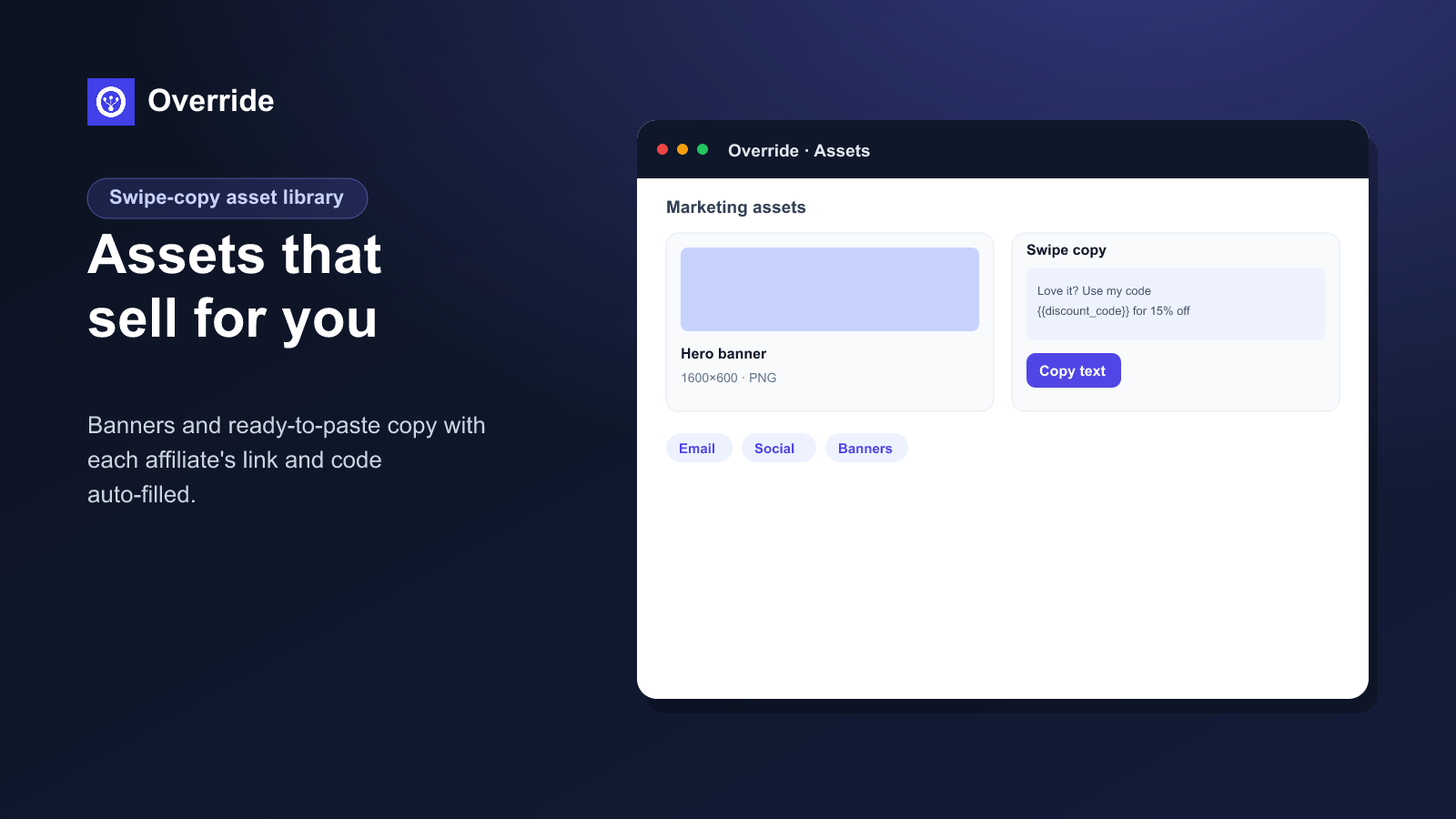
Creators promote faster when you remove the work. Provide ready-made banners, product shots and one-click swipe copy with their link and code already filled in, organized by product or campaign. The easier you make it to post, the more they post.

Let your top creators build a team

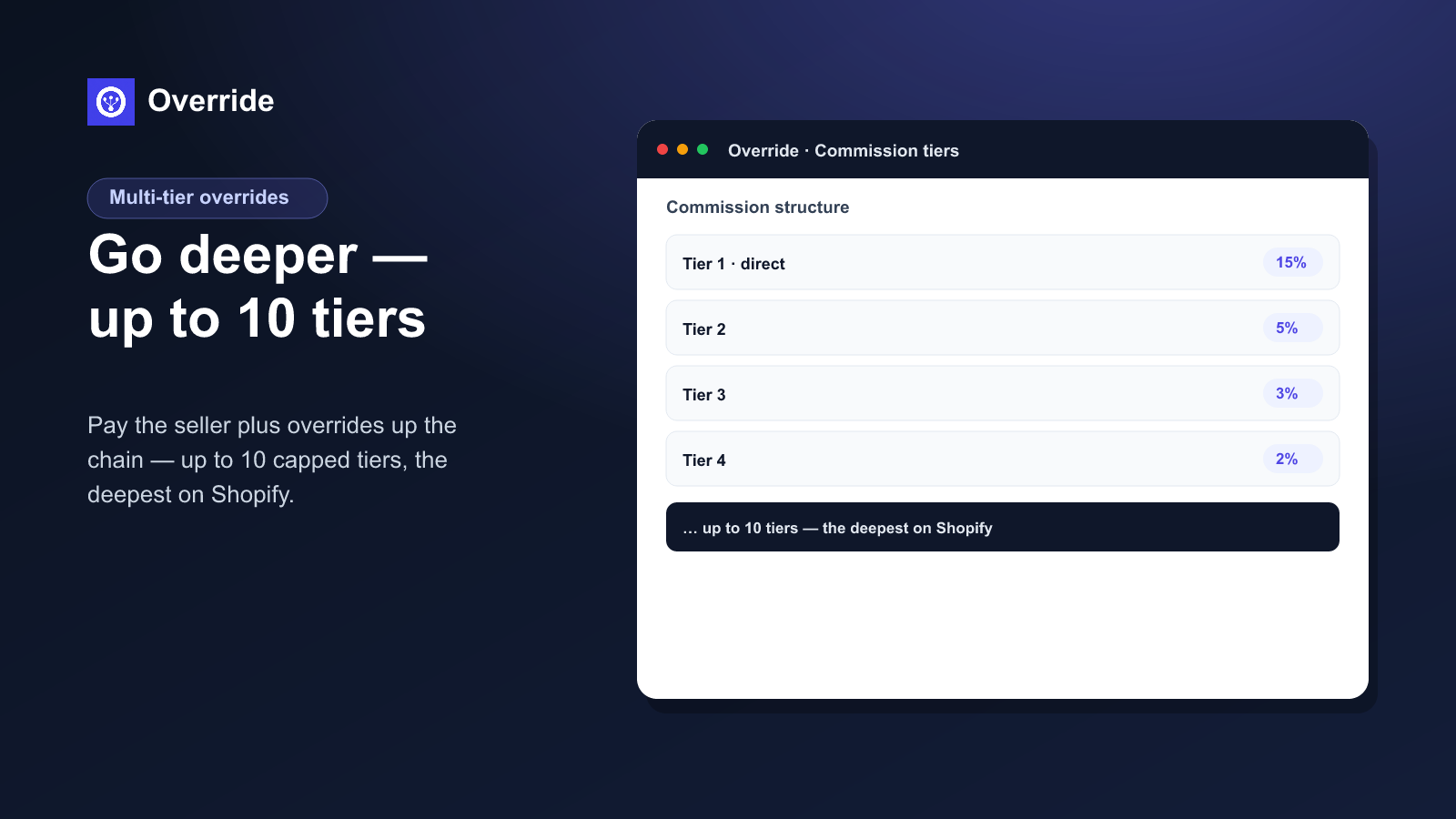
Multi-tier overrides let an established ambassador recruit other creators and earn a small override on their sales — so your best partners help you grow the roster. Keep tier depth capped so the program stays a clean affiliate program, not an MLM.

Do it with Override

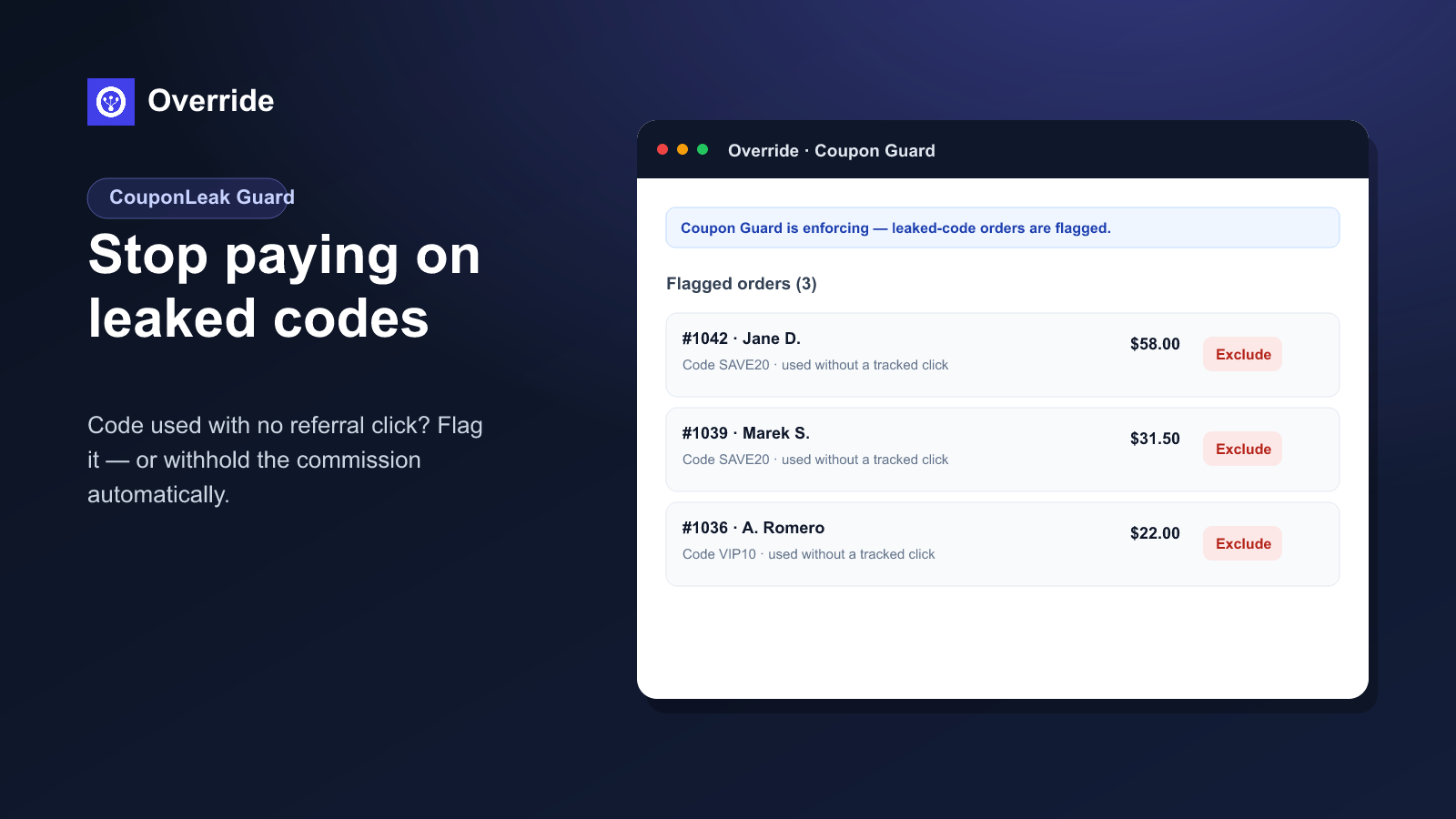
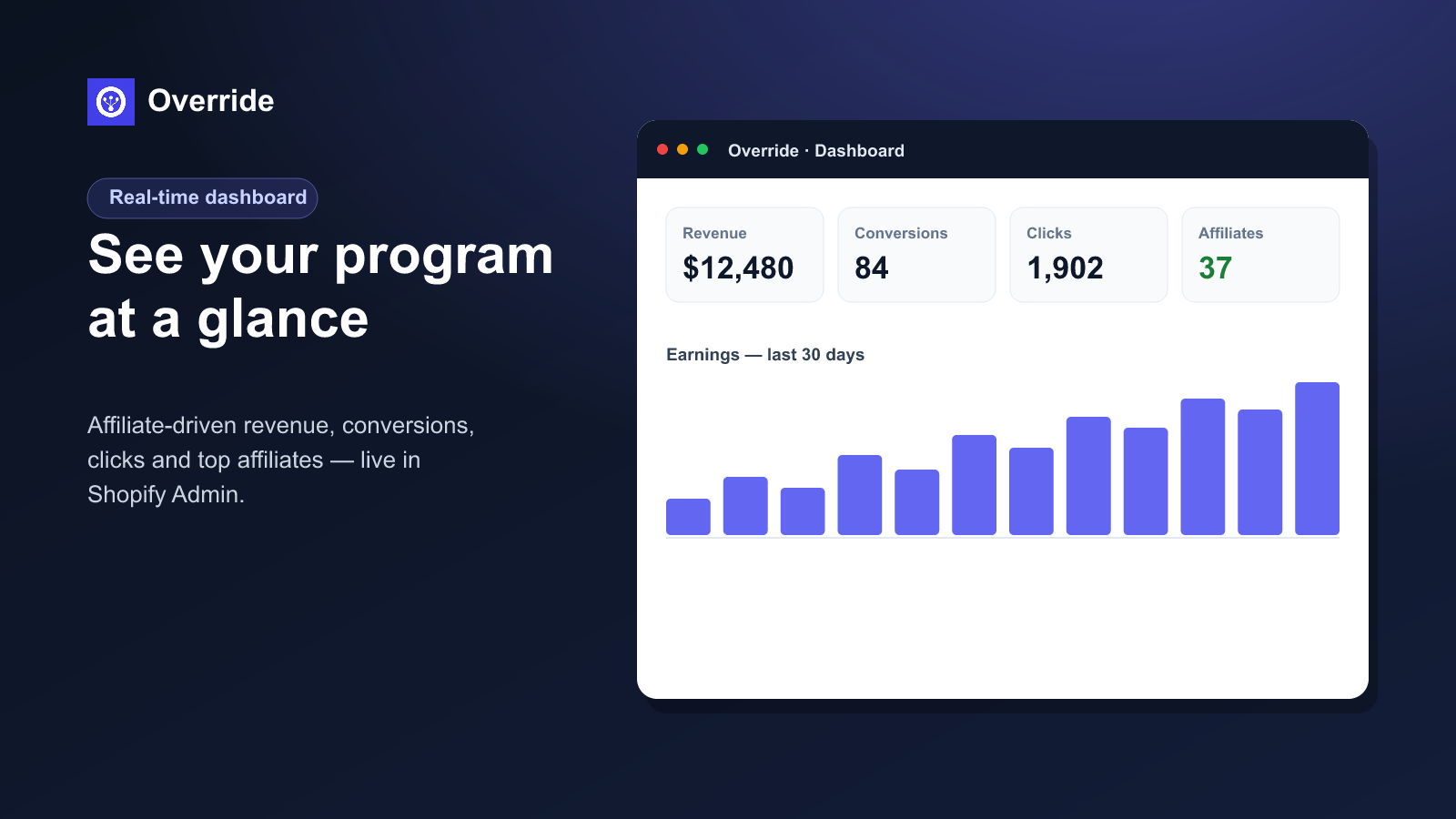
Override gives beauty brands a creator-ready setup: an industry template, performance auto-tiers, a gamified leaderboard, a swipe-copy asset library and multi-tier ambassador overrides — on a flat fee, never a percentage of your sales.
Launch your affiliate program with Override

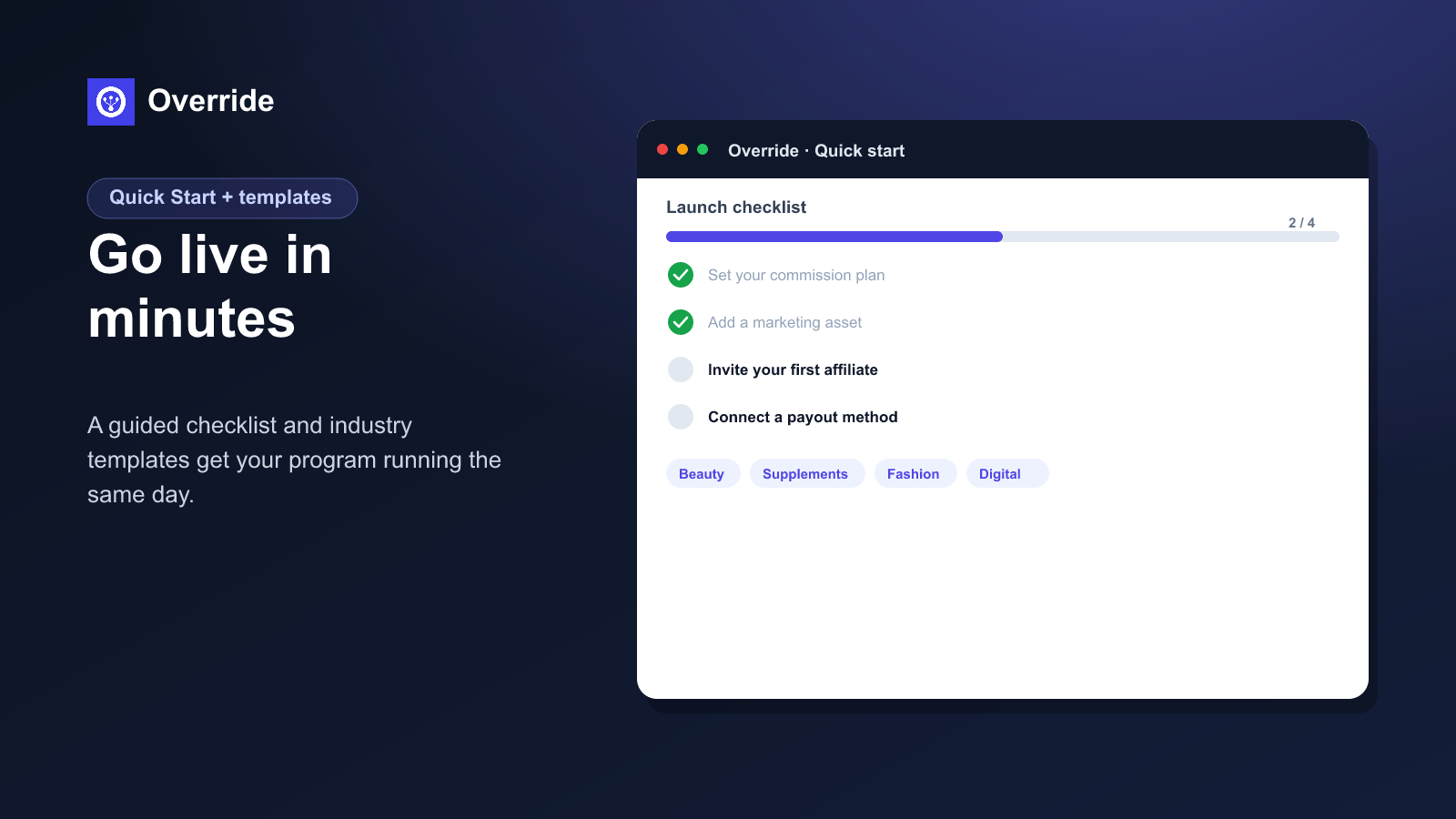
Flat-fee, multi-tier, compliant — live in minutes with a Quick Start checklist and industry templates.

Scroll for more →

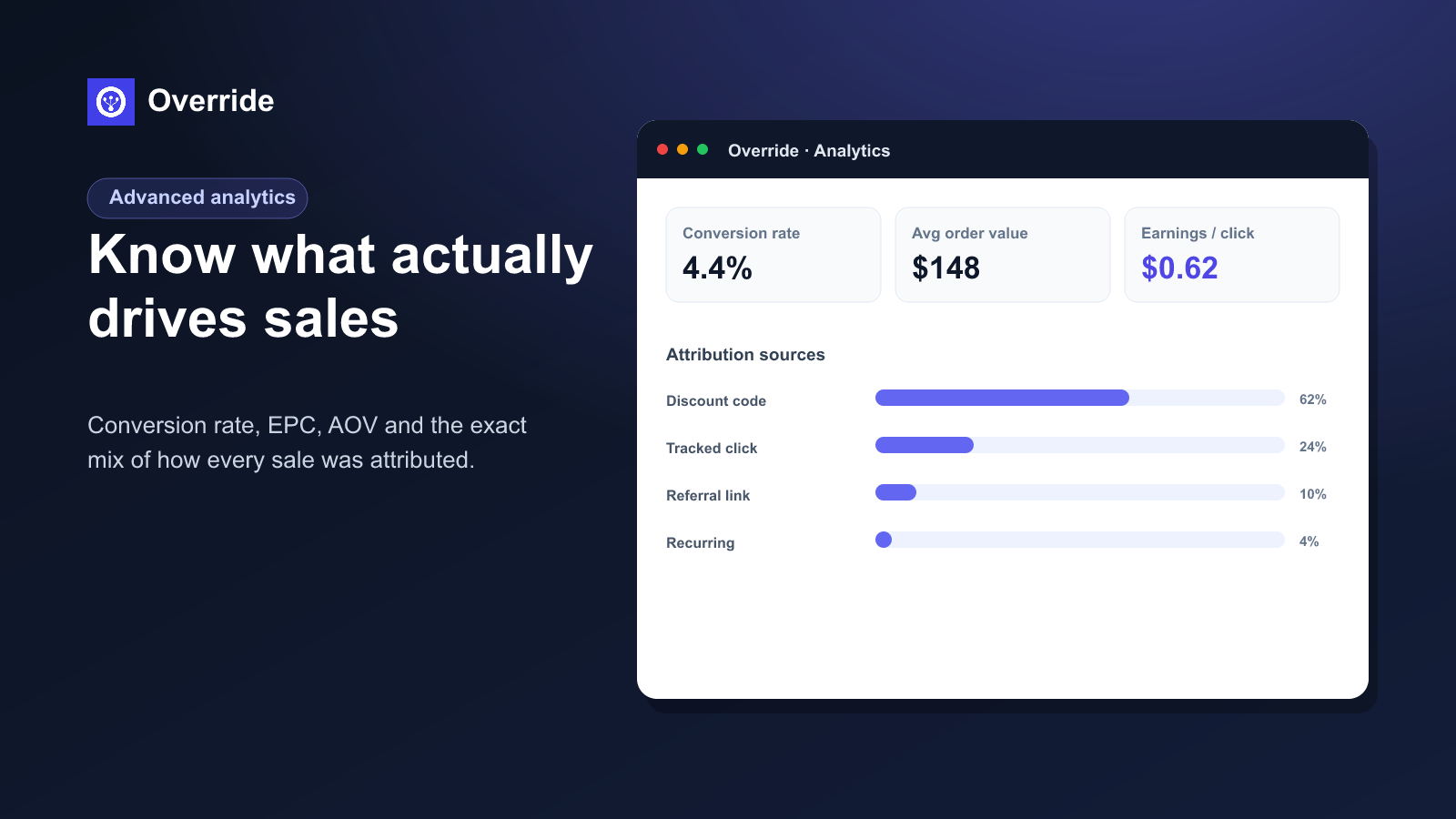
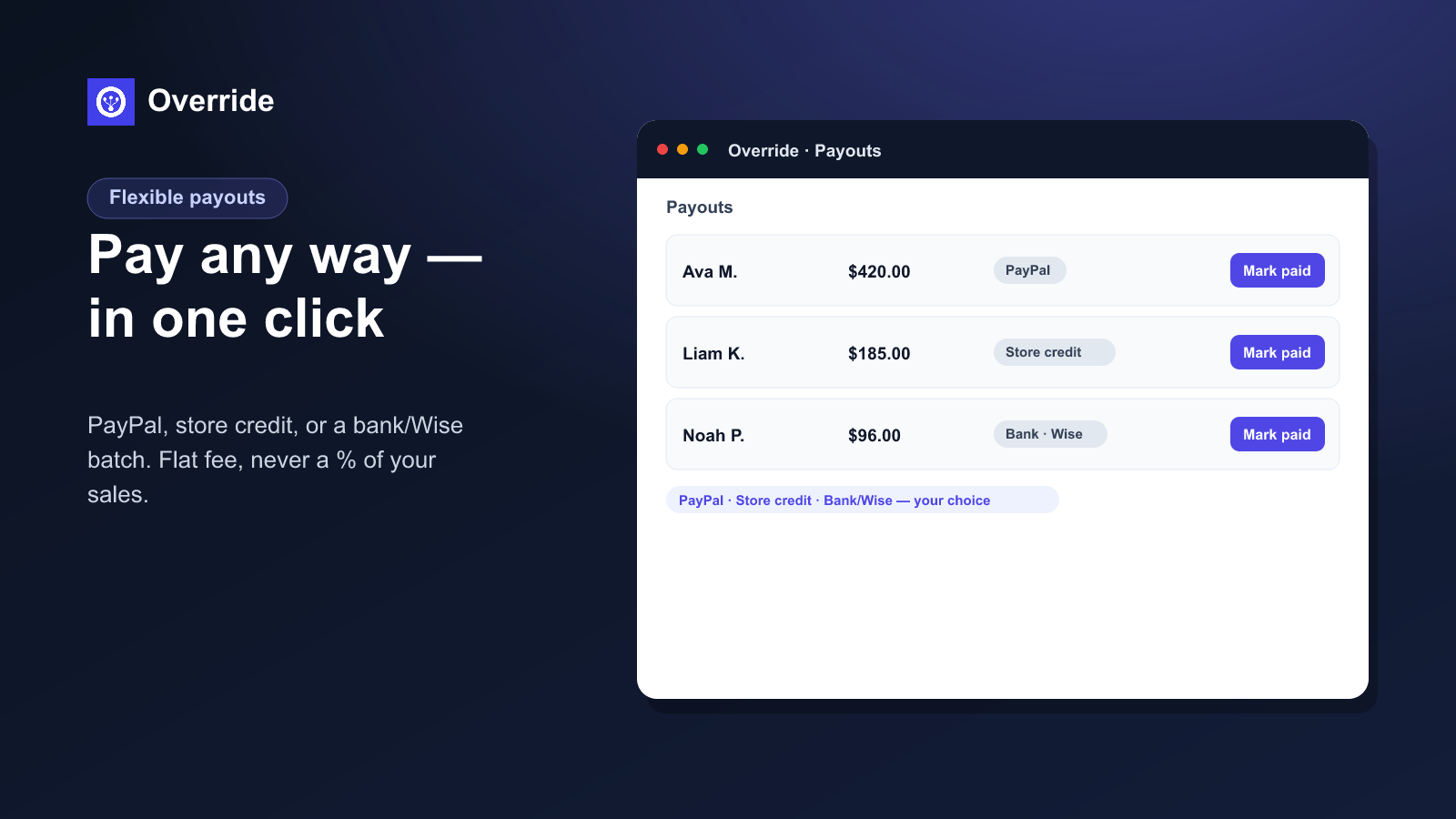
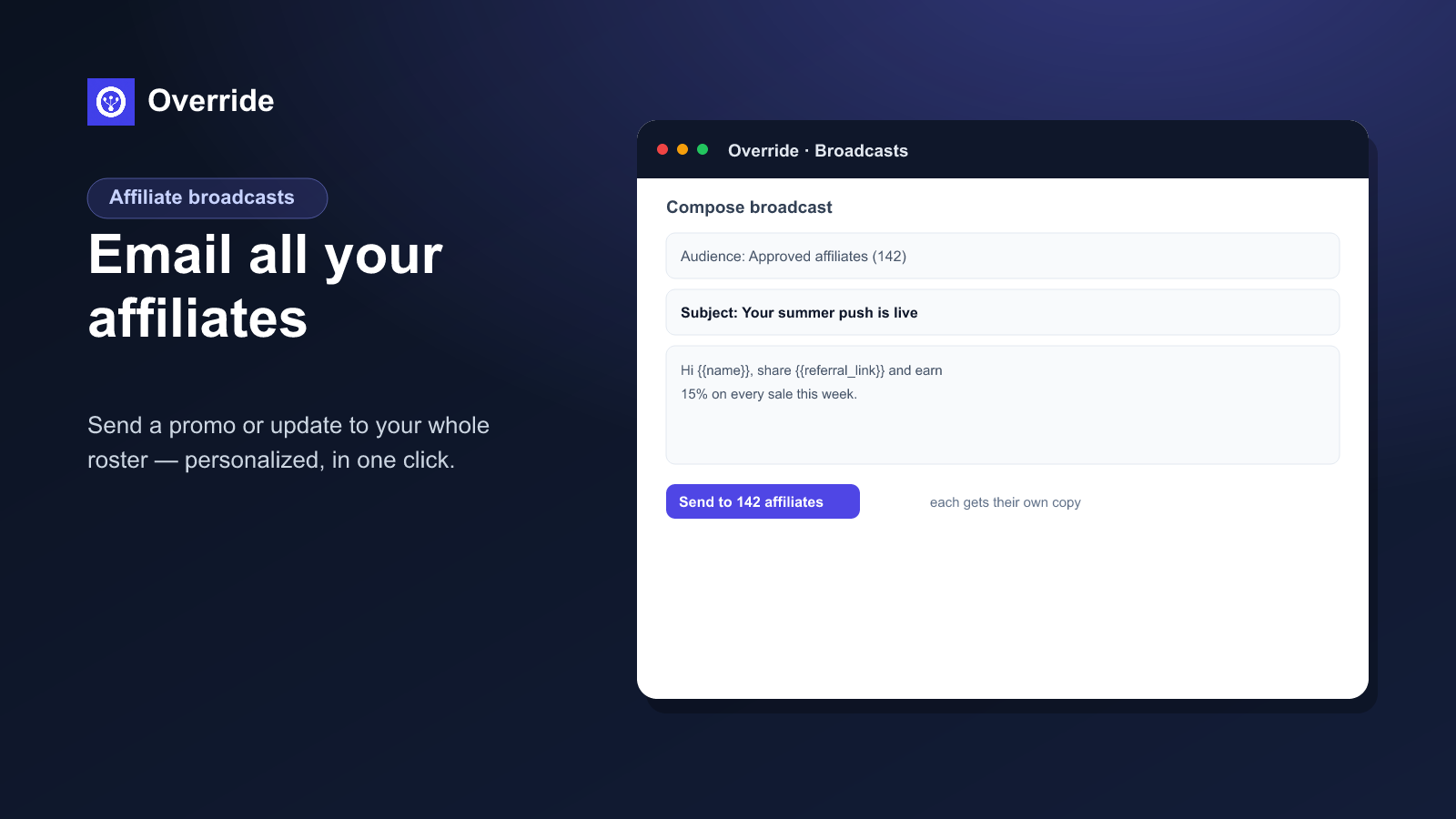
Override — the flat-fee multi-tier affiliate app for Shopify: never a % of your sales, flat fee from $19/moOverride dashboard with affiliate revenue, conversions and earnings chartUp to 10 commission tiers — the deepest multi-tier on ShopifyCouponLeak Guard flagging discount-code orders used without a referral clickRecurring commissions — earn on every repeat orderMilestone bonuses and performance auto-tiersAdvanced analytics: conversion rate, AOV, EPC and attribution sourcesFlexible payouts: PayPal, store credit and bank/WiseBranded affiliate portal with a gamified leaderboardAffiliate broadcasts — email your whole roster, personalizedMulti-campaign tracking with per-campaign linksSwipe-copy asset library with banners and ready-to-paste copyQuick Start checklist and industry templatesDeveloper API, headless conversion tracking and signed webhooks

Keep reading

Guides on running a compliant affiliate program on Shopify.

How to set up an affiliate program on Shopify (2026 step-by-step)

A practical 2026 guide to launching an affiliate program on Shopify: commission structure, attribution, recruiting affiliates, payouts and staying compliant.

Read guide →

Is multi-tier affiliate marketing legal, or is it an MLM?

Multi-tier affiliate programs are legal when they pay on real sales and cap tier depth. Here's the line between affiliate marketing and an illegal MLM/pyramid scheme.

Read guide →

Flat-fee vs revenue-share affiliate apps: what they really cost

Revenue-share affiliate apps take a percentage of every referred sale, so the bill grows as you scale. Here's the real cost vs a flat monthly fee.

Read guide →

Affiliate commission rates by industry (2026 benchmarks)

Typical affiliate commission rates for beauty, supplements, fashion, digital products and creator brands — with sensible multi-tier structures to copy.

Read guide →

Track affiliate sales on headless Shopify (Hydrogen) with an API

Headless and custom storefronts break normal affiliate tracking. Here's how to attribute affiliate sales server-to-server with a conversion API — and sync events with webhooks.

Read guide →

Recurring affiliate commissions: pay affiliates for repeat orders

Recurring commissions reward affiliates when the customers they referred buy again — ideal for subscriptions and repeat-purchase brands. Here's how they work, compliantly and without storing PII.

Read guide →

How to stop affiliate discount codes leaking to coupon sites

Affiliate codes end up on coupon aggregators, and you pay commission on sales you'd have made anyway. Here's how to detect leaked-code abuse and stop paying for it.

Read guide →

How to recruit your first affiliates for a Shopify store

Practical, proven ways to recruit affiliates for a Shopify store — starting with your own customers, an on-site block, an invite email, and a portal that converts.

Read guide →