Is multi-tier affiliate marketing legal, or is it an MLM?
June 4, 2026 · 5 min read
Multi-tier affiliate marketing — where an affiliate earns on their own referred sales and a smaller override on the sales of affiliates they recruited — is completely legal when it's structured correctly. The confusion comes from its surface resemblance to multi-level marketing (MLM). The difference is simple and important.
What makes a program legal
- Commissions are paid on real product sales only — never for signing up or recruiting people.
- There is no joining fee and no required purchase to participate.
- Tier depth is limited (a handful of levels), not an endless downline.
What makes a scheme illegal
A pyramid scheme pays primarily for recruitment rather than product sales, often requires a buy-in, and rewards an unbounded downline. Regulators (like the U.S. FTC) look at whether participants earn mainly from selling a genuine product to real customers, or mainly from enrolling others. If it's the latter, it's a problem.
How Override keeps you on the right side
- Sales-only commissions: recruitment earns nothing; an override is only paid when a recruited affiliate makes a real sale.
- No fees, no buy-ins: affiliates always join free.
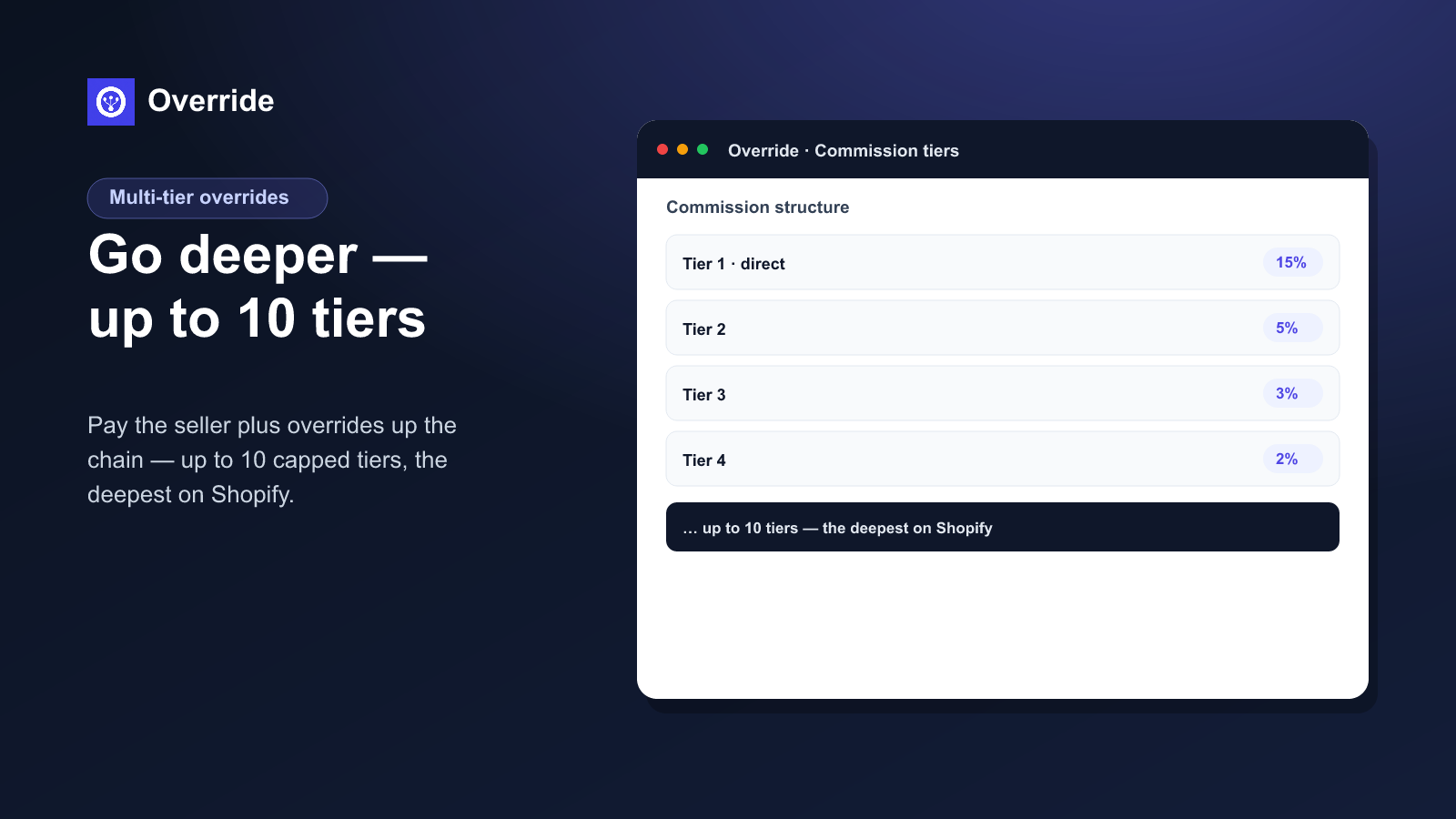
- Tier depth is bounded (up to 10) — never an endless downline.
- FTC-disclosure text built into the portal and shareable assets.
That structure lets you reward partners for building a small team of sellers — the upside people associate with MLM — without the legal and reputational risk. If you want tiered overrides done compliantly on Shopify, that's exactly what Override is built for.