How to stop affiliate discount codes leaking to coupon sites
June 5, 2026 · 5 min read
You give an influencer a discount code. It works — and then it shows up on a coupon-aggregator site. Now shoppers who were already going to buy find the code, apply it, and you pay an affiliate commission on a sale the affiliate didn't actually influence. At scale this quietly drains your margin.
Why it costs you twice
You discount the order AND pay a commission — on a customer you'd have converted for free. Worse, leaked codes reward the wrong people and make your affiliate ROI look better than it is, so you over-invest in a channel that's partly fake.
How to detect it
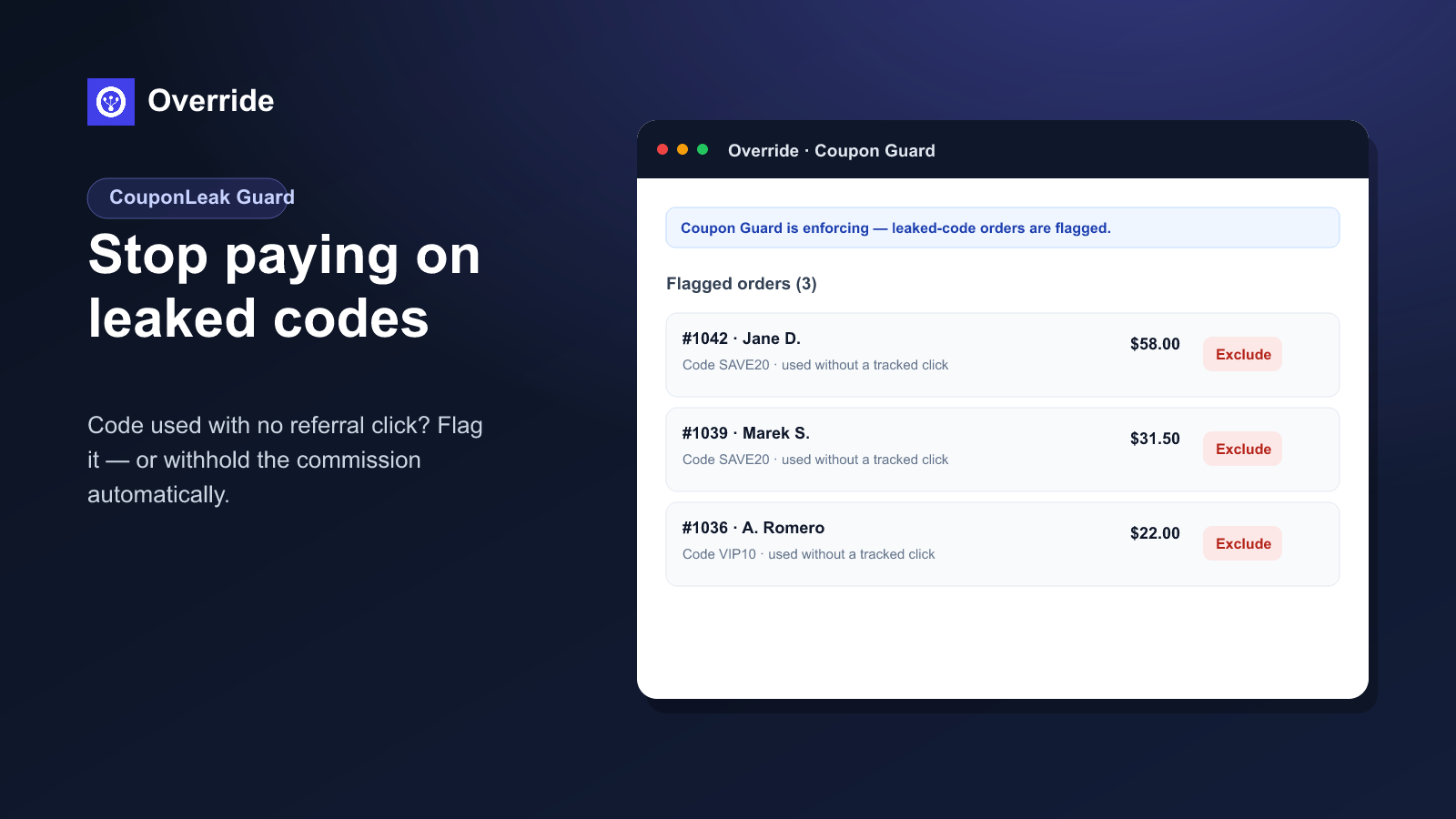
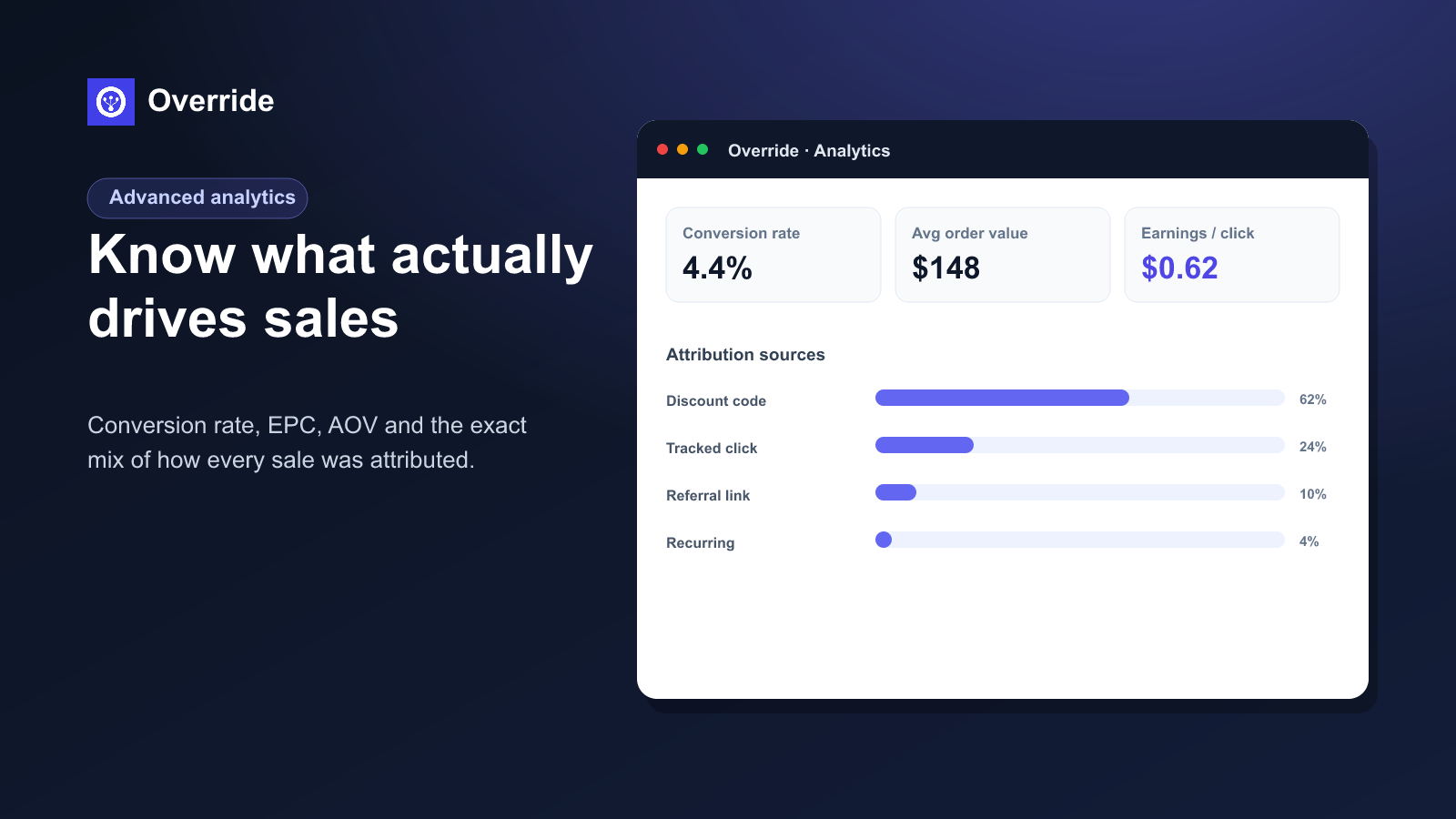
The tell-tale signal: a discount code is used but there's no corresponding referral click for that checkout. A genuine affiliate sale usually has a click trail (the customer followed the affiliate's link). A leaked-code order typically arrives 'cold' — code applied, no tracked click. A sudden spike in a single code's usage is another red flag.
Flag, then enforce
- Flag mode: suspicious orders are flagged for review but still pay — you stay in control.
- Enforce mode: commission is automatically withheld unless the code use is corroborated by a tracked click.
- Per-code activity: watch each code's recent volume and flagged count to spot leaks early.
Override's CouponLeak Guard does exactly this — flag or enforce, a review queue with one-click exclude, and 7-day per-code activity. It's a Scale feature, and for most stores it pays for itself the first time a code leaks.