How to set up an affiliate program on Shopify (2026 step-by-step)
June 4, 2026 · 7 min read
An affiliate program turns your happy customers and creators into a sales force that only gets paid when they drive a real sale. On Shopify you can launch one in an afternoon. This guide walks through the decisions that matter — commission structure, attribution, recruiting, and payouts — and how to keep the program compliant and predictable.
1. Decide your commission structure
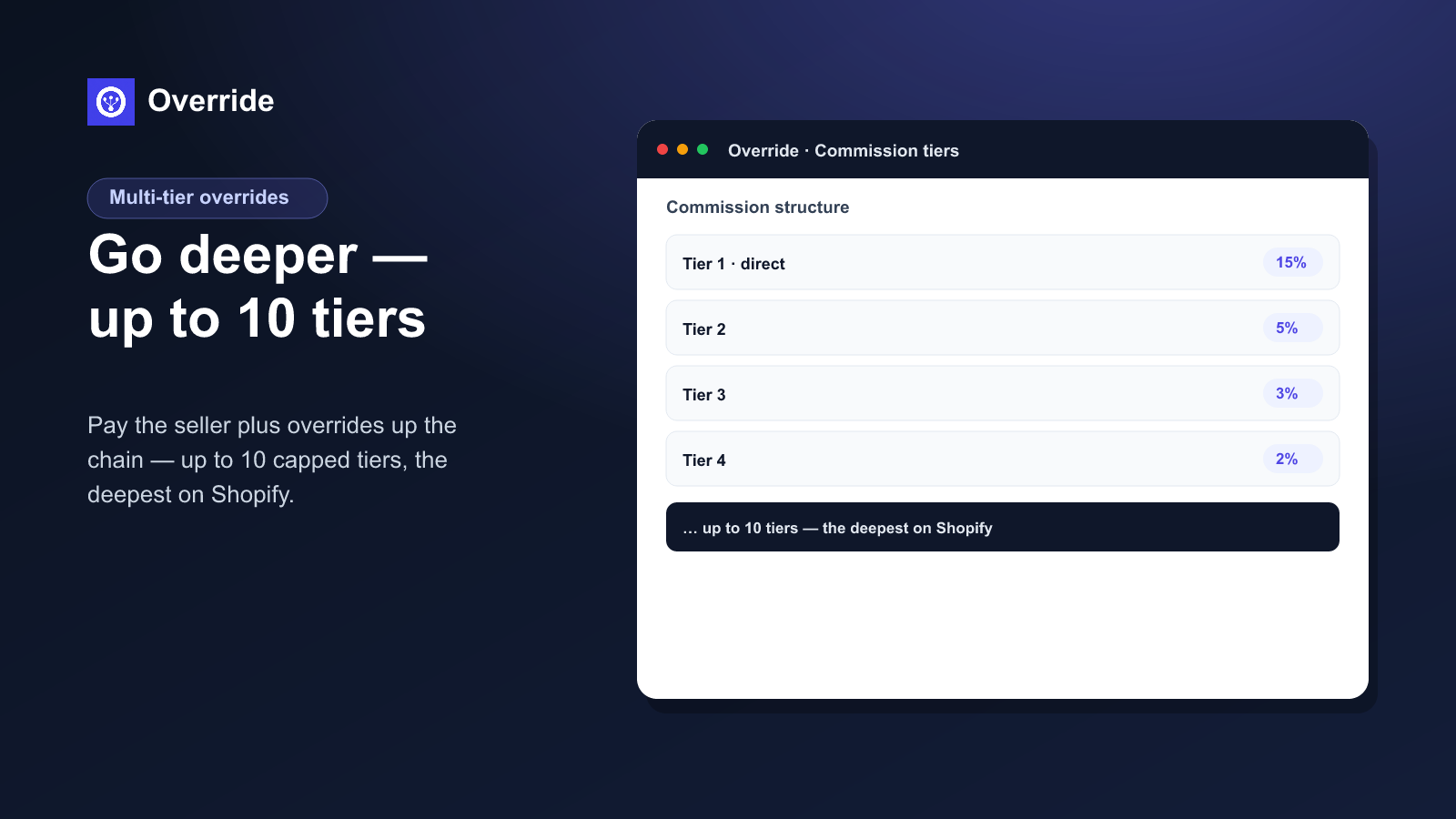
Start with a single-tier rate — a percentage of each sale an affiliate refers. Typical ranges run 10–30% depending on your margins (digital products and supplements sit at the high end; apparel lower). If you want partners to recruit other partners, add a second tier: the sponsor earns a smaller override (e.g. 5%) on their recruits' sales. Keep tier depth bounded — Override caps it (up to 10 on the Scale plan) rather than an endless downline — to stay clearly on the right side of the line between affiliate marketing and an MLM.
- Commission base: pay on the product subtotal (less discounts), never on shipping or tax.
- Hold period: wait out your return window (e.g. 30 days) before a commission is payable.
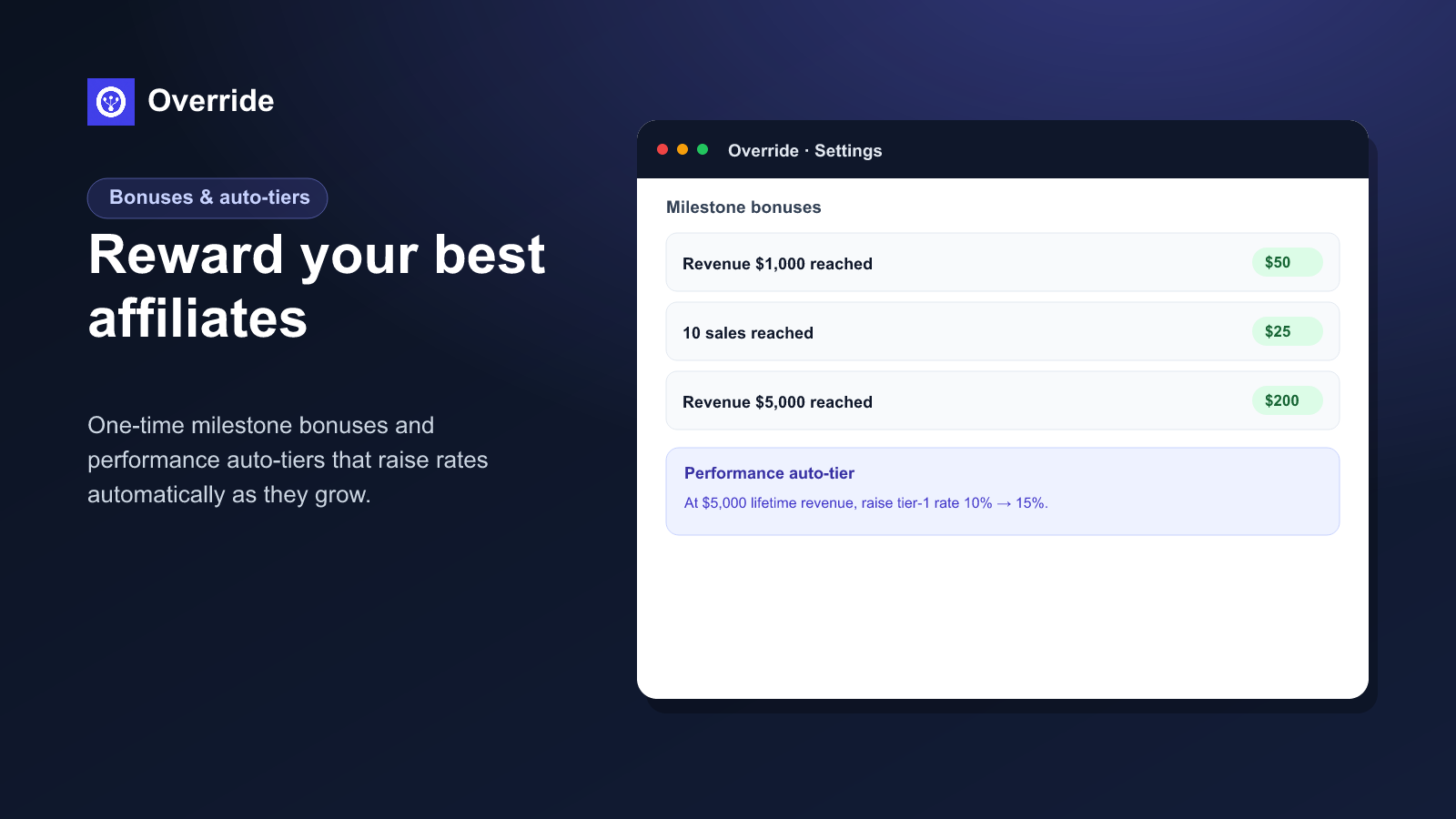
- Bonuses: a one-time reward at a revenue or sales milestone is a cheap, powerful motivator.
2. Get attribution right
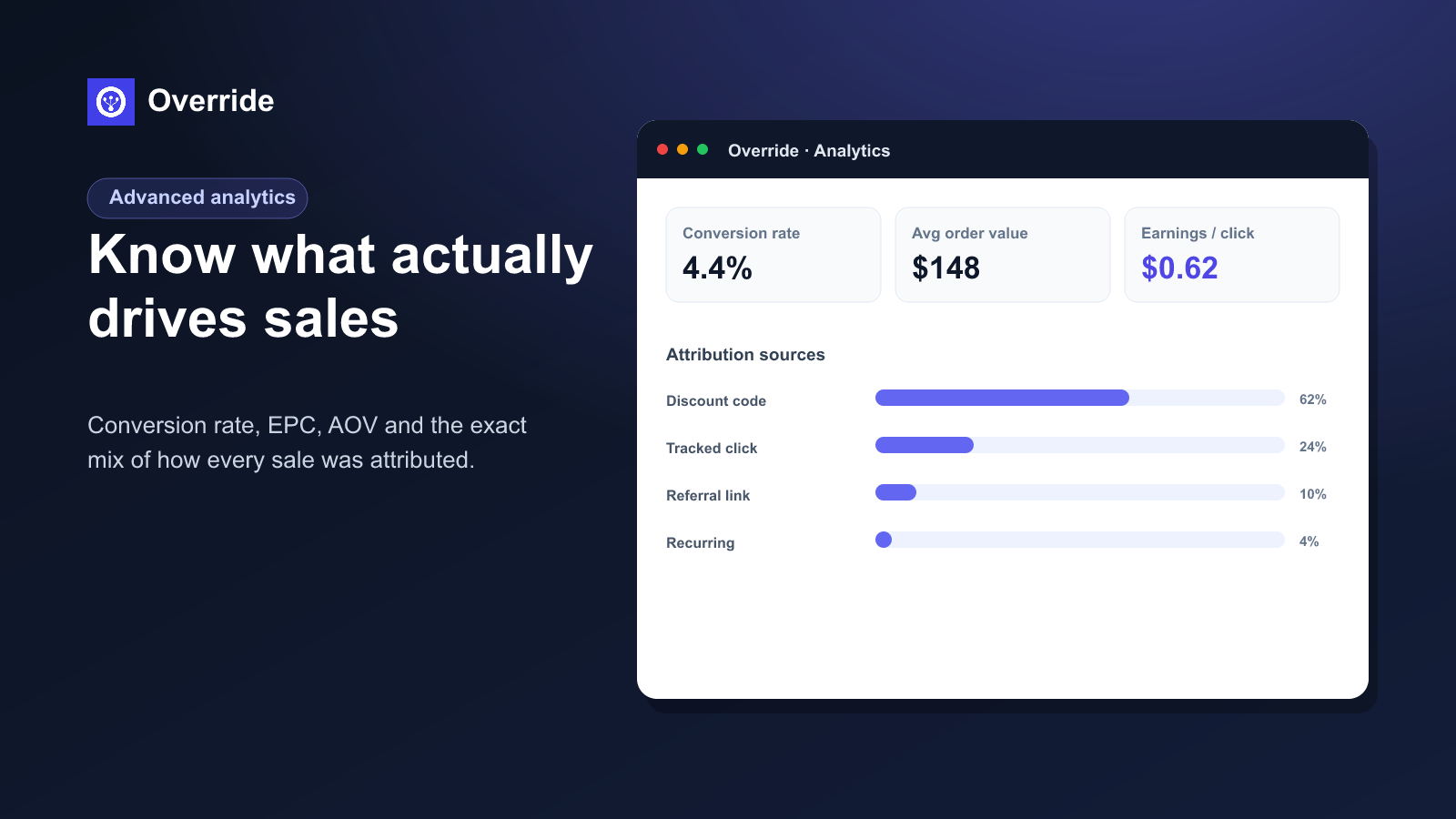
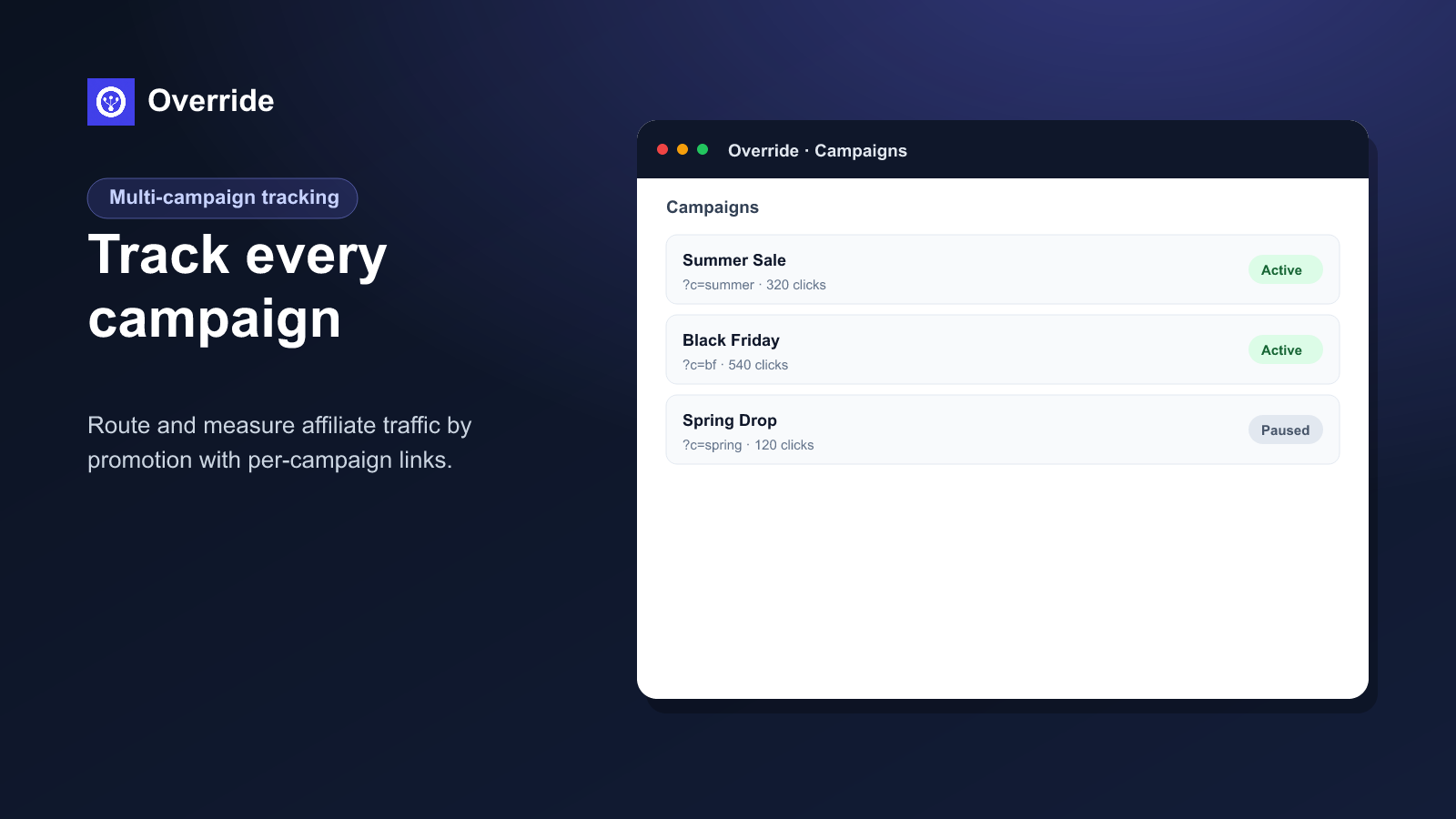
Attribution is how a sale gets credited to the affiliate who drove it. The most reliable method on Shopify is a unique discount code per affiliate: when a customer checks out with that code, the order is unambiguously theirs. Pair it with a last-click cookie (via a Web Pixel) so sales are still credited when the customer clicks a referral link but doesn't enter the code. Override does both automatically.
3. Recruit your first affiliates
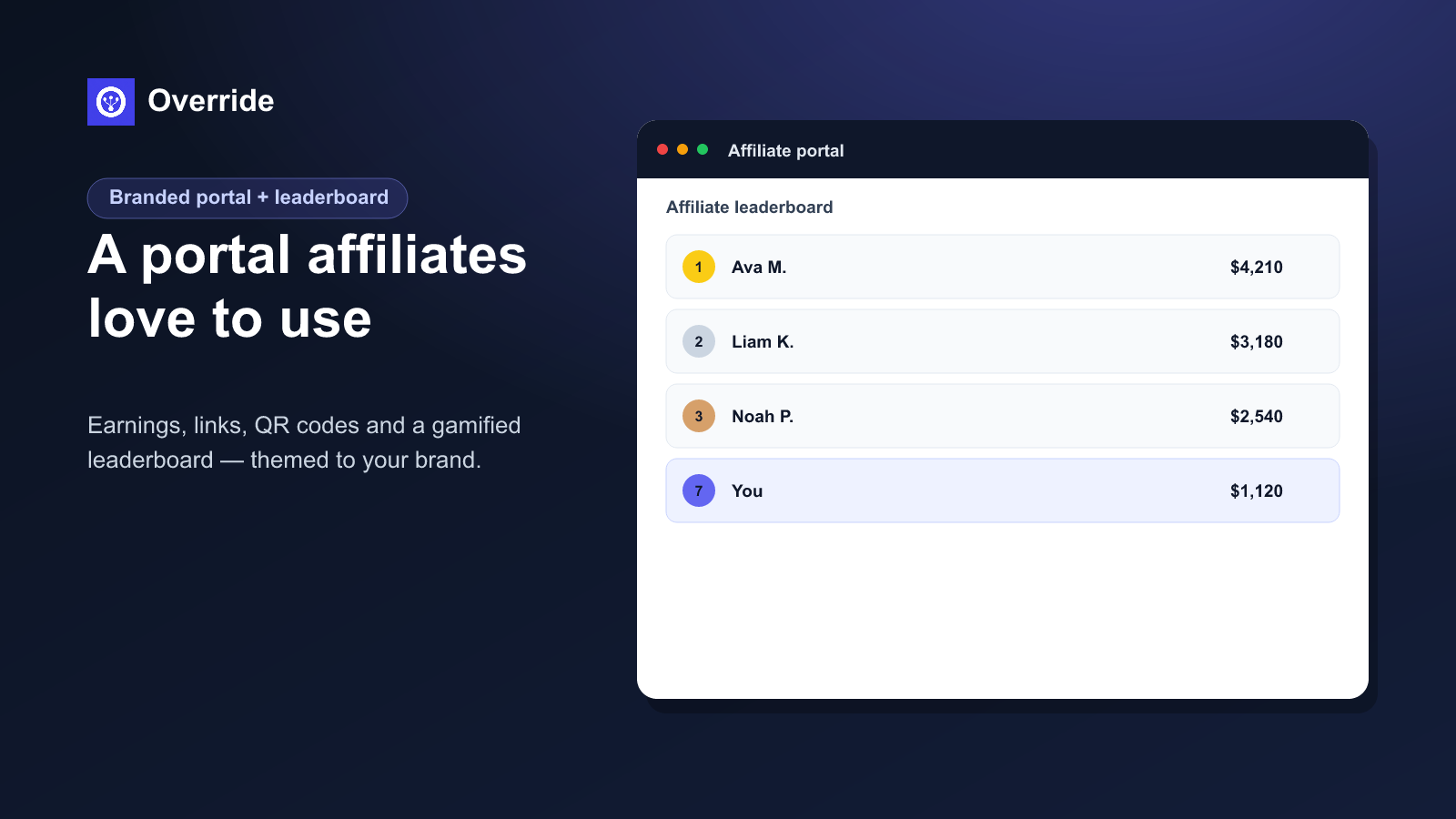
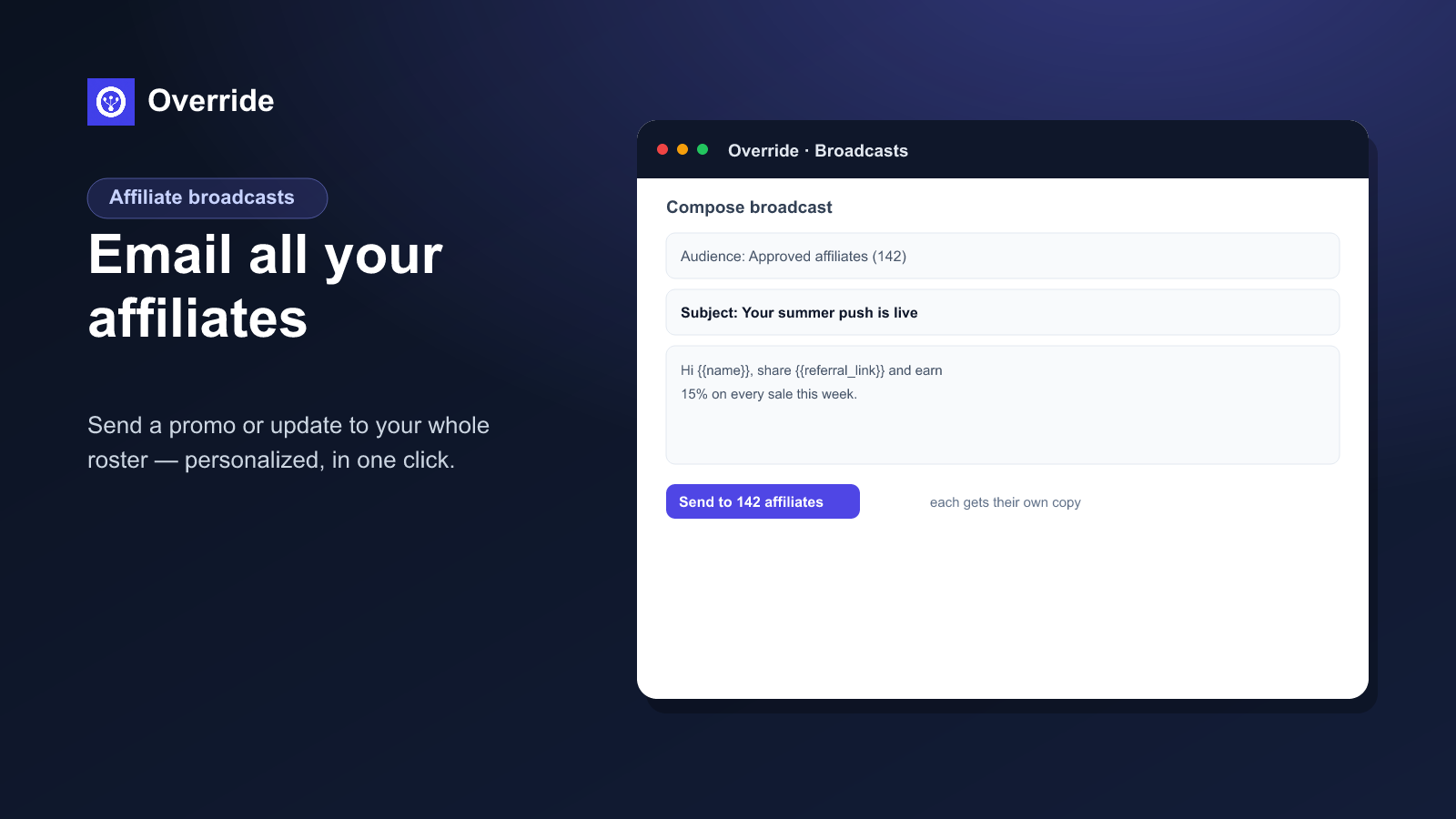
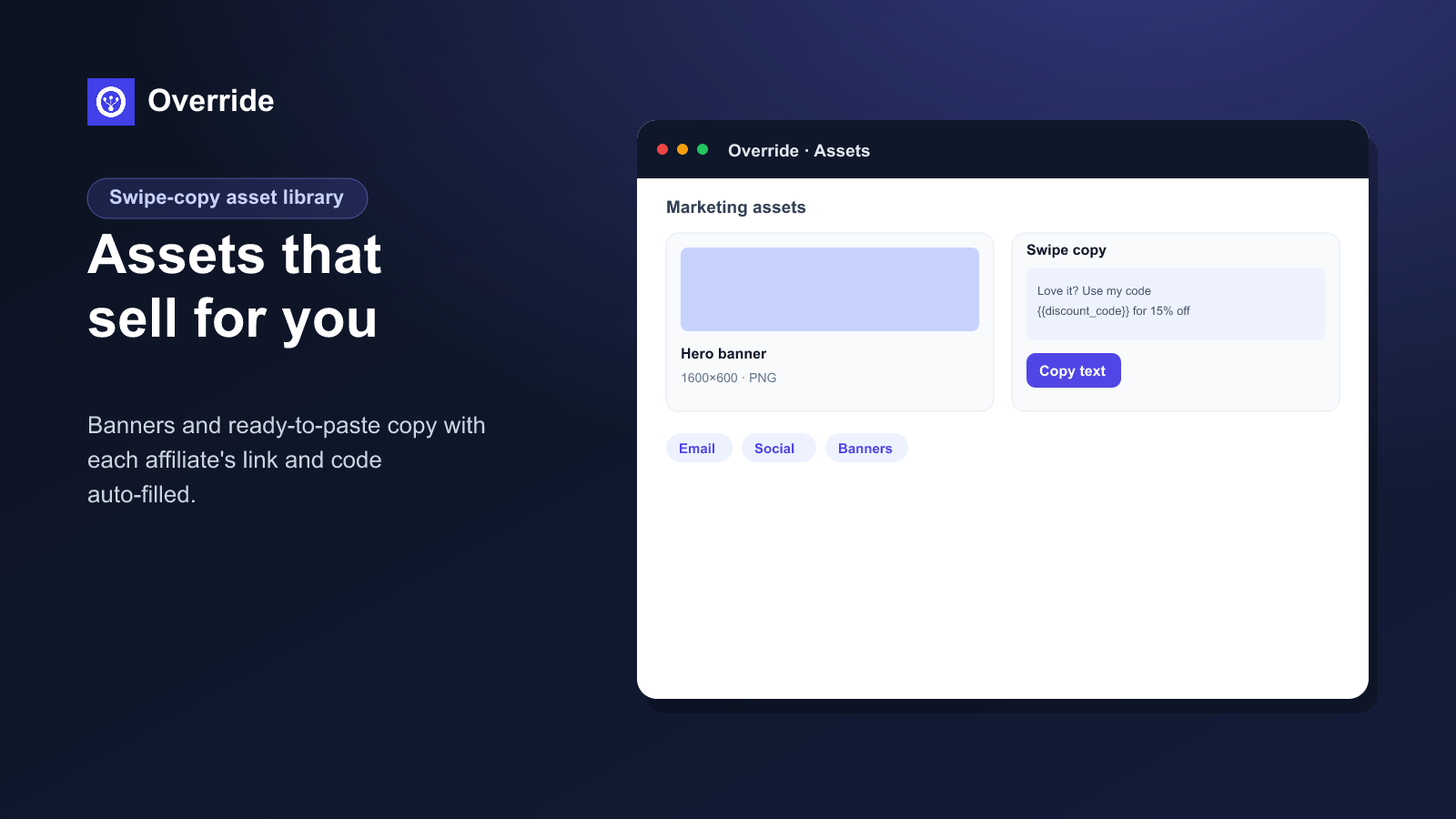
Your best first affiliates are your existing customers — they already love the product. Email your list with a simple invite, add a "Become an affiliate" block to your storefront, and give partners ready-made assets (banners and swipe copy) so they can start promoting in minutes. A branded signup page and a clean portal make the program feel legitimate and worth joining.
4. Pay affiliates without the headache
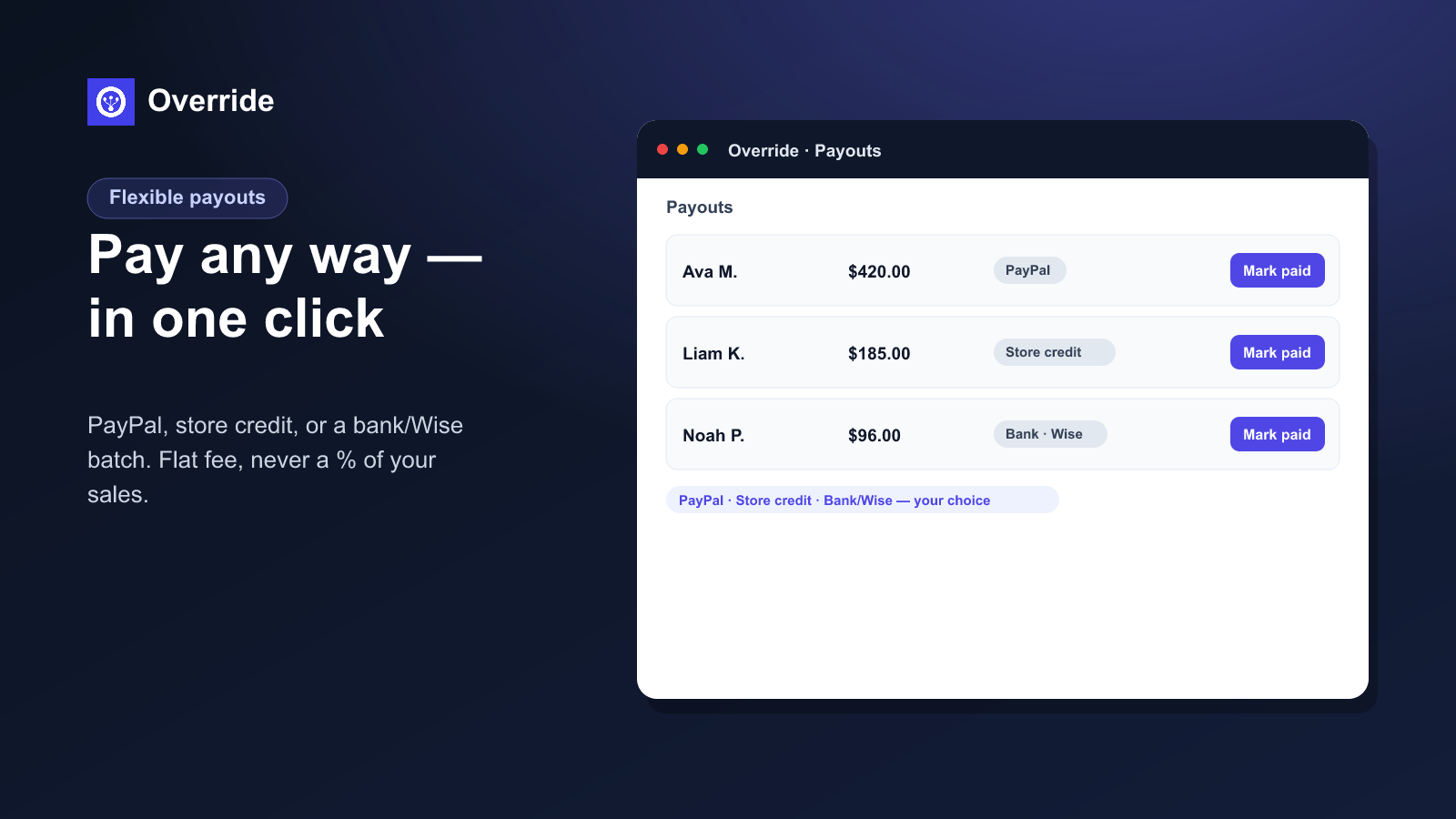
Set a payout minimum so you're not sending tiny transfers, then pay in whatever rail fits: PayPal in one click, store credit (a discount code), or a bank/Wise batch CSV for high volume. Automate the hold-then-approve flow so commissions clear on schedule, and make sure refunds claw back commissions automatically.
5. Watch the cost as you scale
Many affiliate apps charge a percentage of the sales your affiliates generate — so your bill grows exactly when the program starts working. A flat monthly fee keeps costs predictable no matter how much you sell. That single choice can save you thousands a year once the program scales.
Launch it with Override
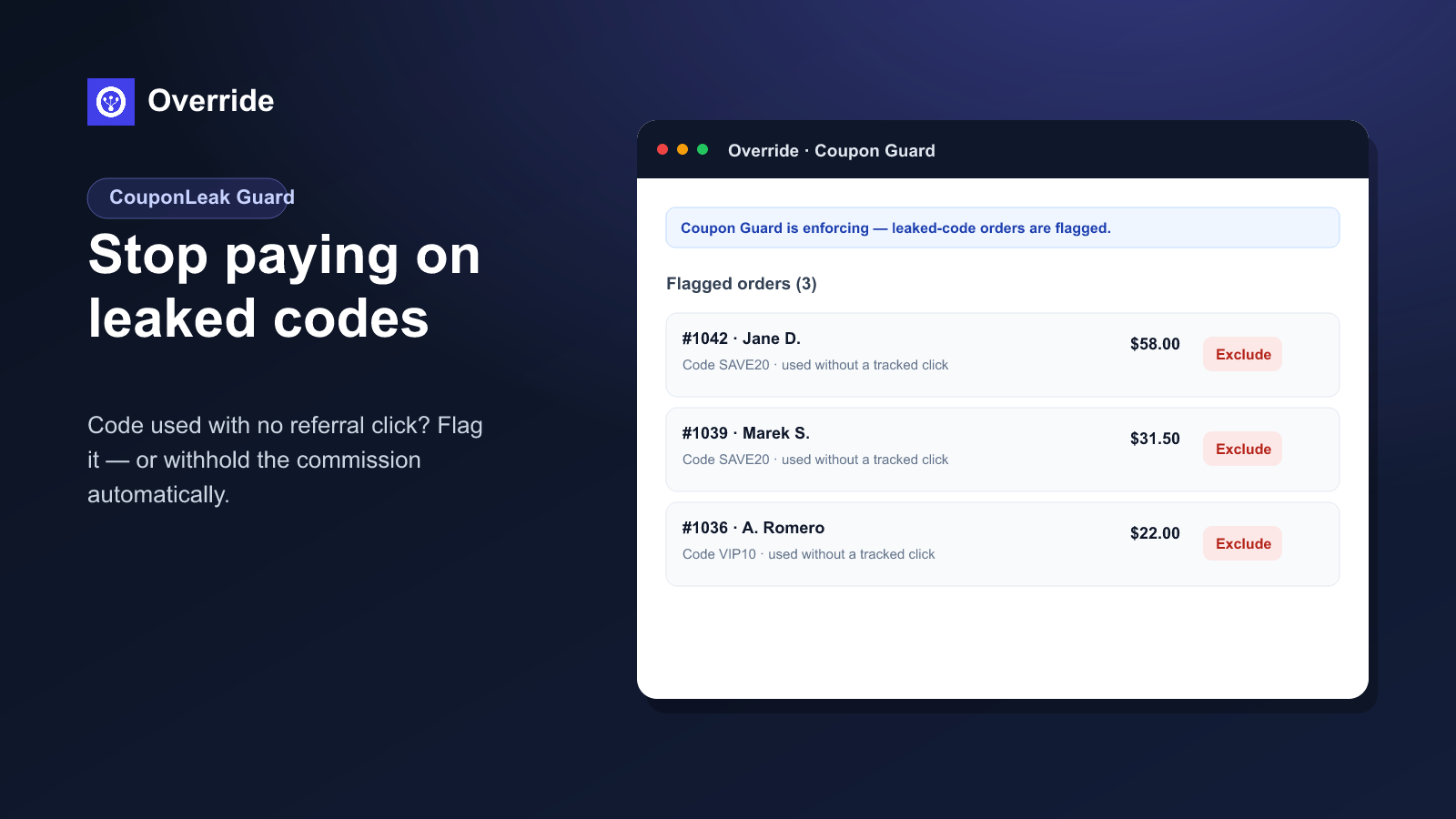
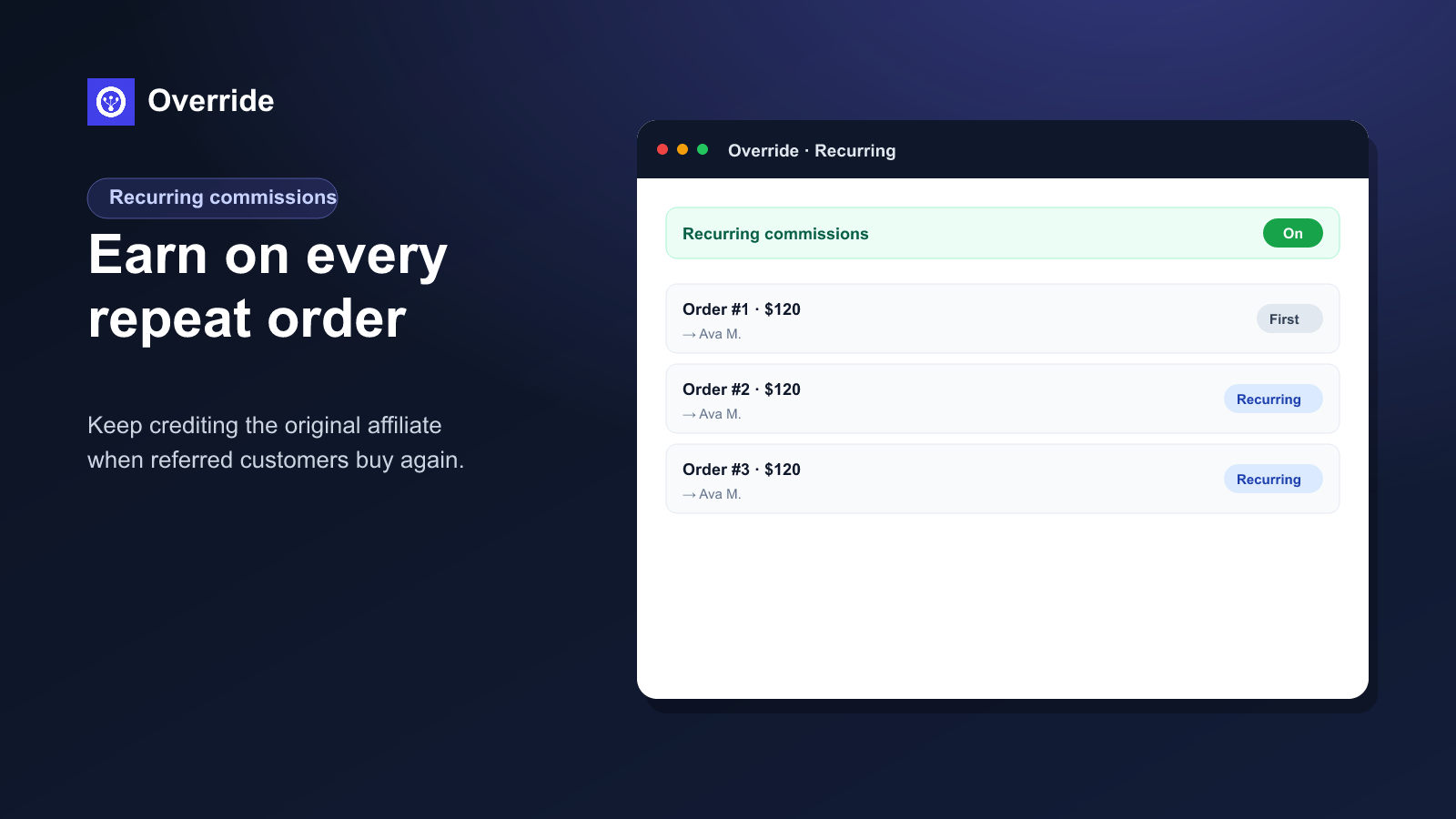
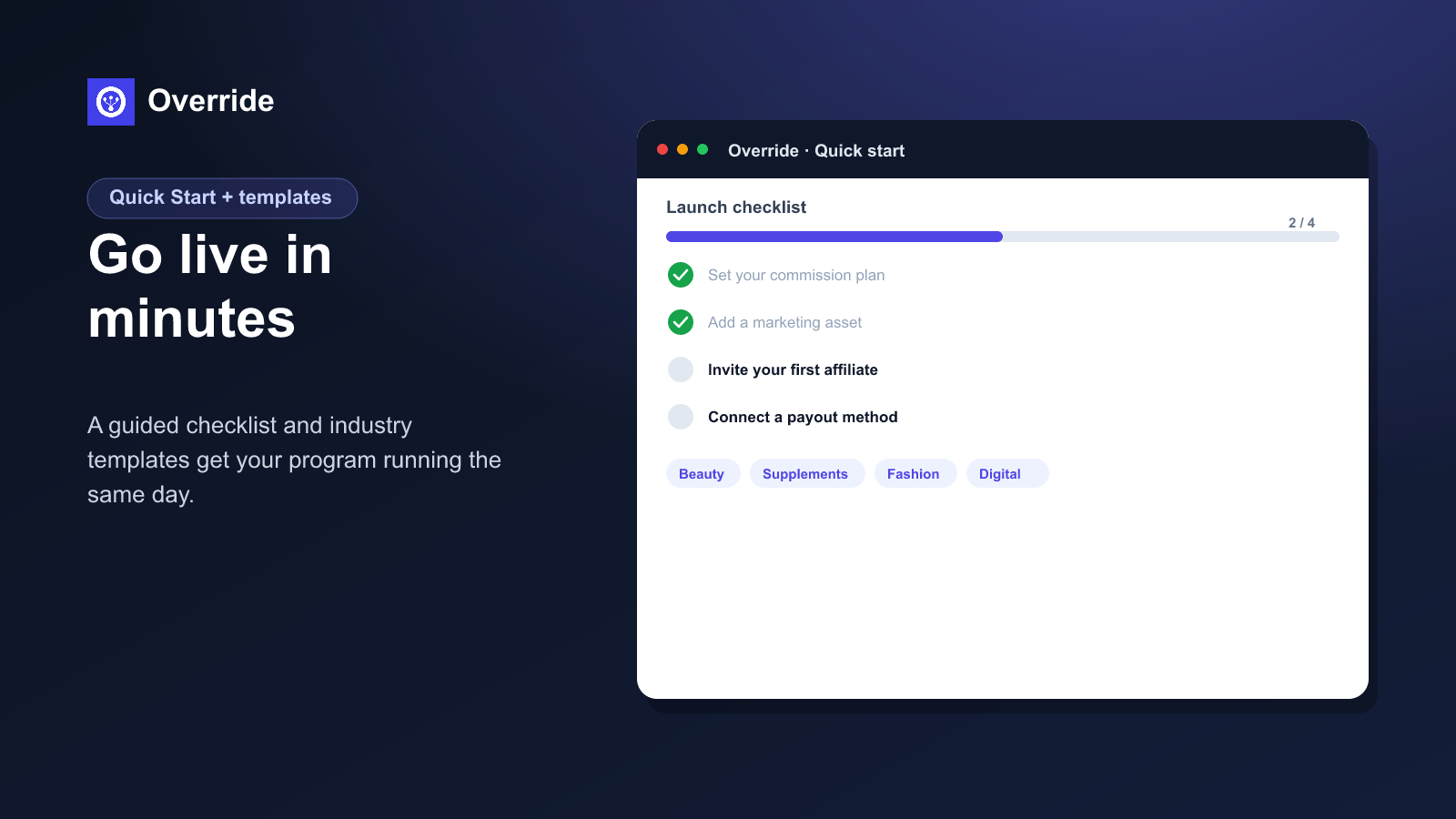
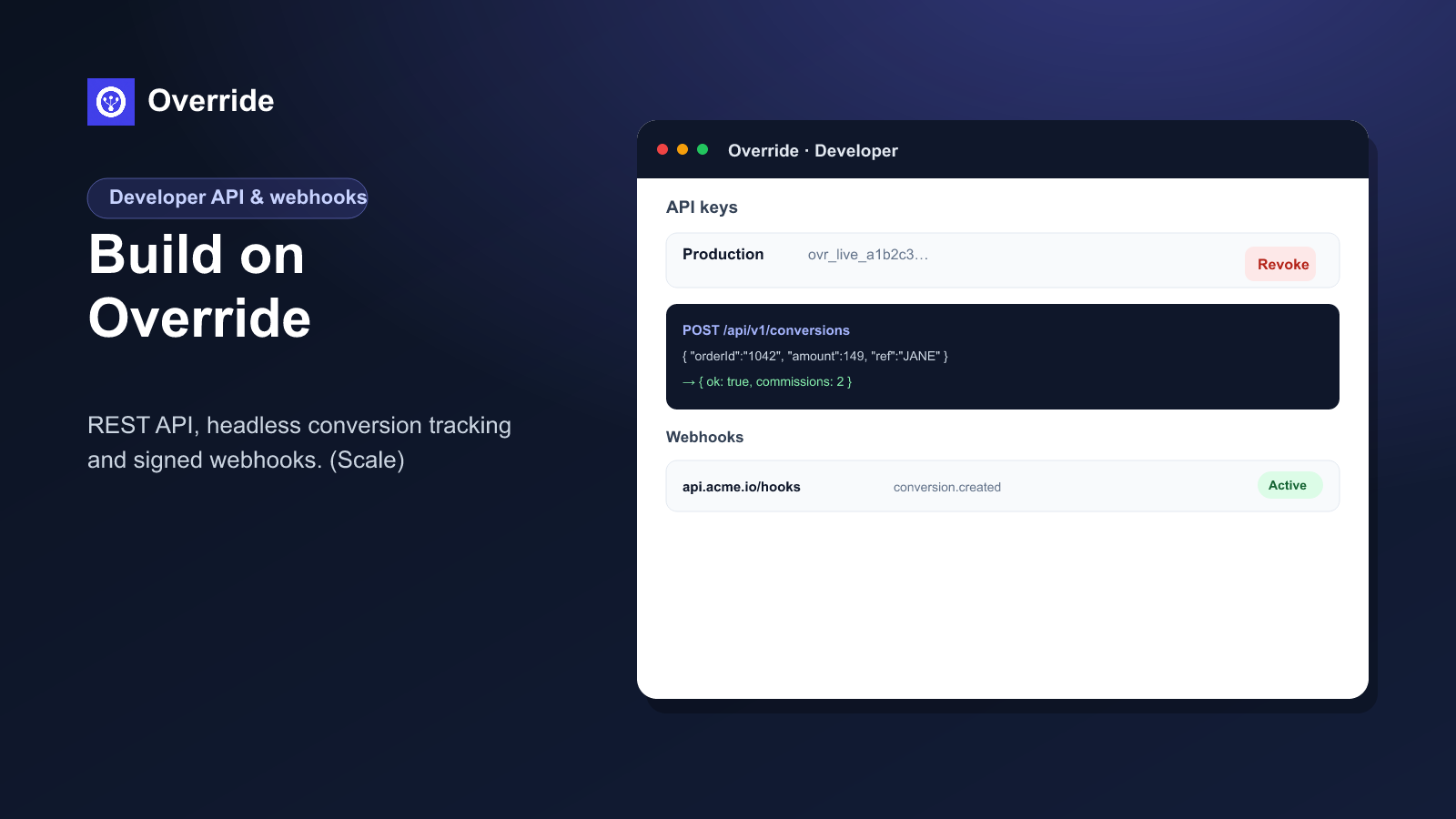
Override is a flat-fee, multi-tier affiliate app for Shopify that handles all of the above — code + last-click attribution, recurring commissions, bonuses, fraud and coupon-leak protection, a branded portal, and flexible payouts — with a Quick Start checklist and industry templates so you go live fast.