← All guides

How to run an affiliate program for a supplements brand (2026)

June 5, 2026 · 6 min read

Few categories suit an affiliate program as well as supplements. Margins are high enough to share generously, customers reorder on a schedule, and buying decisions are driven by trust — exactly what a recommendation from a coach, athlete or creator provides. Here's how to build a supplements affiliate program that compounds.

Why supplements and affiliates fit

  • High margins leave room for a generous, motivating commission.
  • Frequent reorders mean most lifetime value comes after the first sale — ideal for recurring commissions.
  • Trust-driven category: coaches, nutritionists and micro-influencers convert because their audience believes them.
  • Results content (routines, before/after, stacks) gives affiliates an endless supply of things to post.

Recommended structure

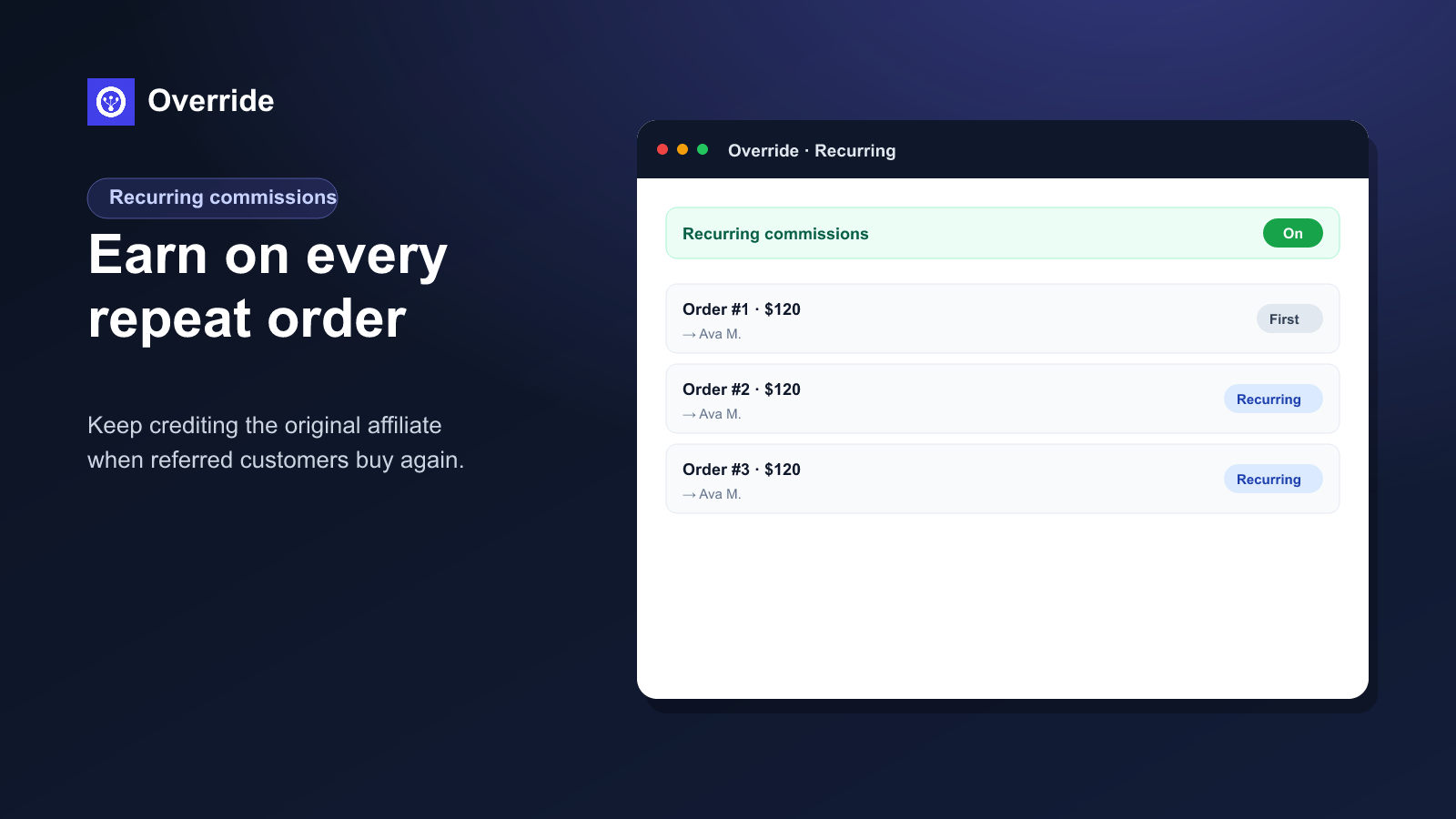
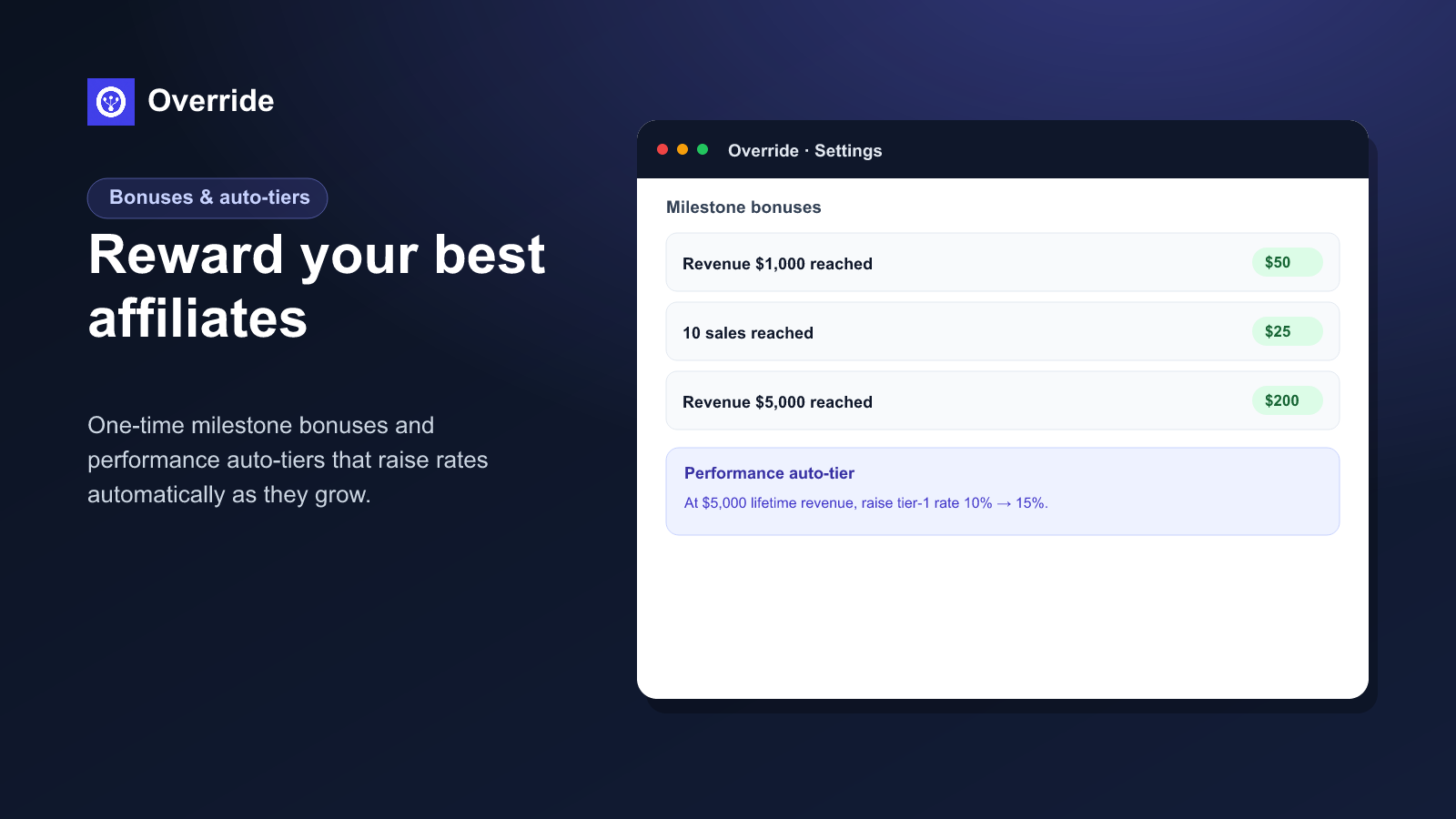
A solid starting point is 20% direct + a 5% sponsor override, with recurring commissions switched on so affiliates keep earning when their referred customers reorder. Add a milestone bonus to reward early traction. Because reorder rates are high, recurring is the single most important lever here — it's what turns a one-off post into a long-term income stream for your partner.

Recruit the right affiliates

Start with your own customers — people already taking the product are your most credible promoters. Then target fitness coaches, personal trainers, nutrition and wellness creators, and gym communities. Add a "Become an affiliate" block to your store so engaged buyers can join from the page they're already on.

Compliance matters more in this category

Supplements come with rules. Affiliates must disclose the relationship (FTC), and they must not make disease or unrealistic health claims on your behalf — that's a liability for your brand. The safest approach is to give partners pre-approved swipe copy and assets so the language stays compliant, and to keep your program structurally clean: commissions on real sales only, no buy-ins, capped tiers.

Do it with Override

Override ships a supplements-friendly template, recurring commissions and milestone bonuses out of the box, plus a swipe-copy asset library so you control the claims your affiliates make. Built-in fraud and coupon-leak protection keep payouts honest — all on a flat monthly fee, never a cut of your sales.
Launch your affiliate program with Override

Flat-fee, multi-tier, compliant — live in minutes with a Quick Start checklist and industry templates.

Scroll for more →

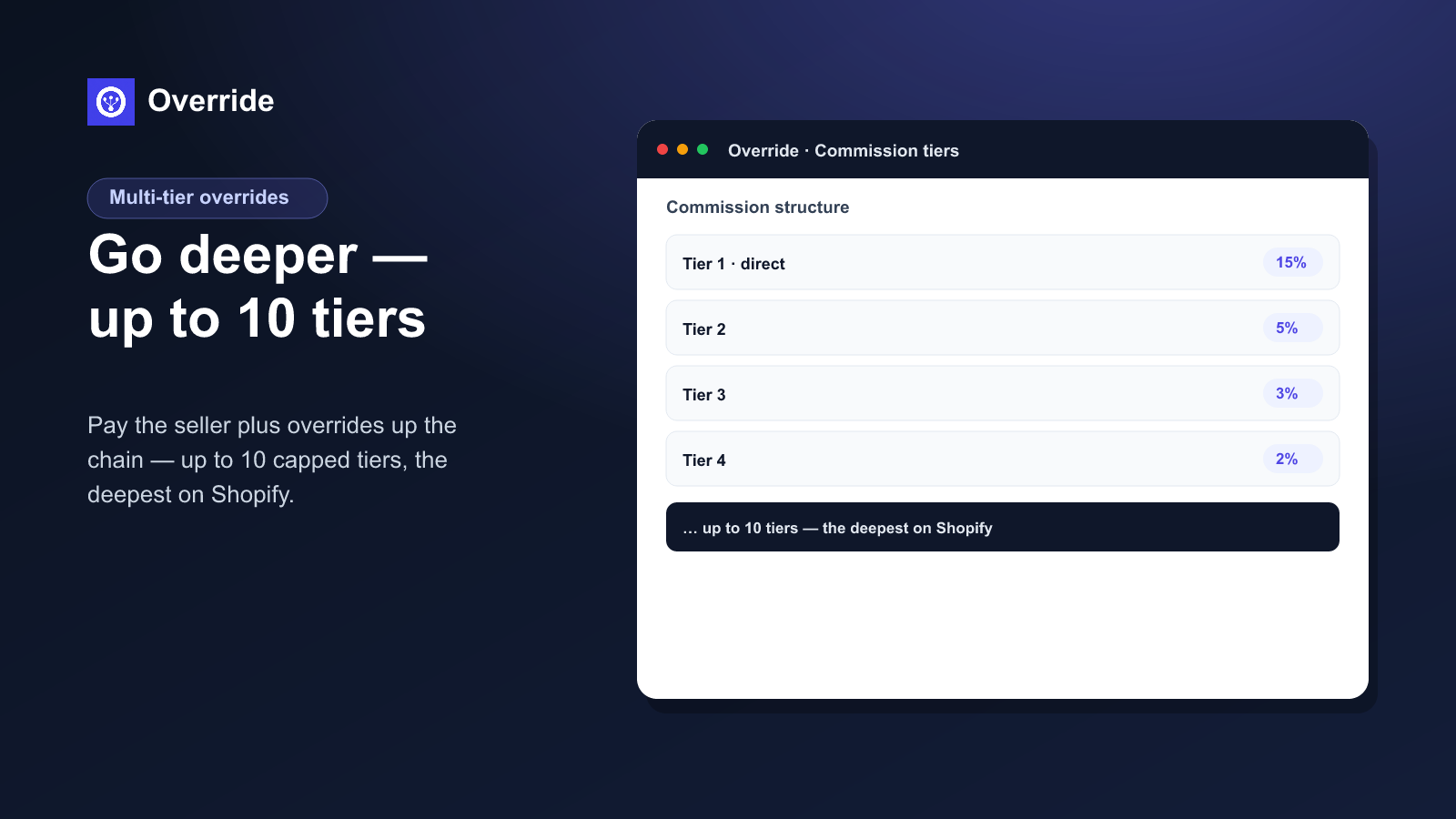
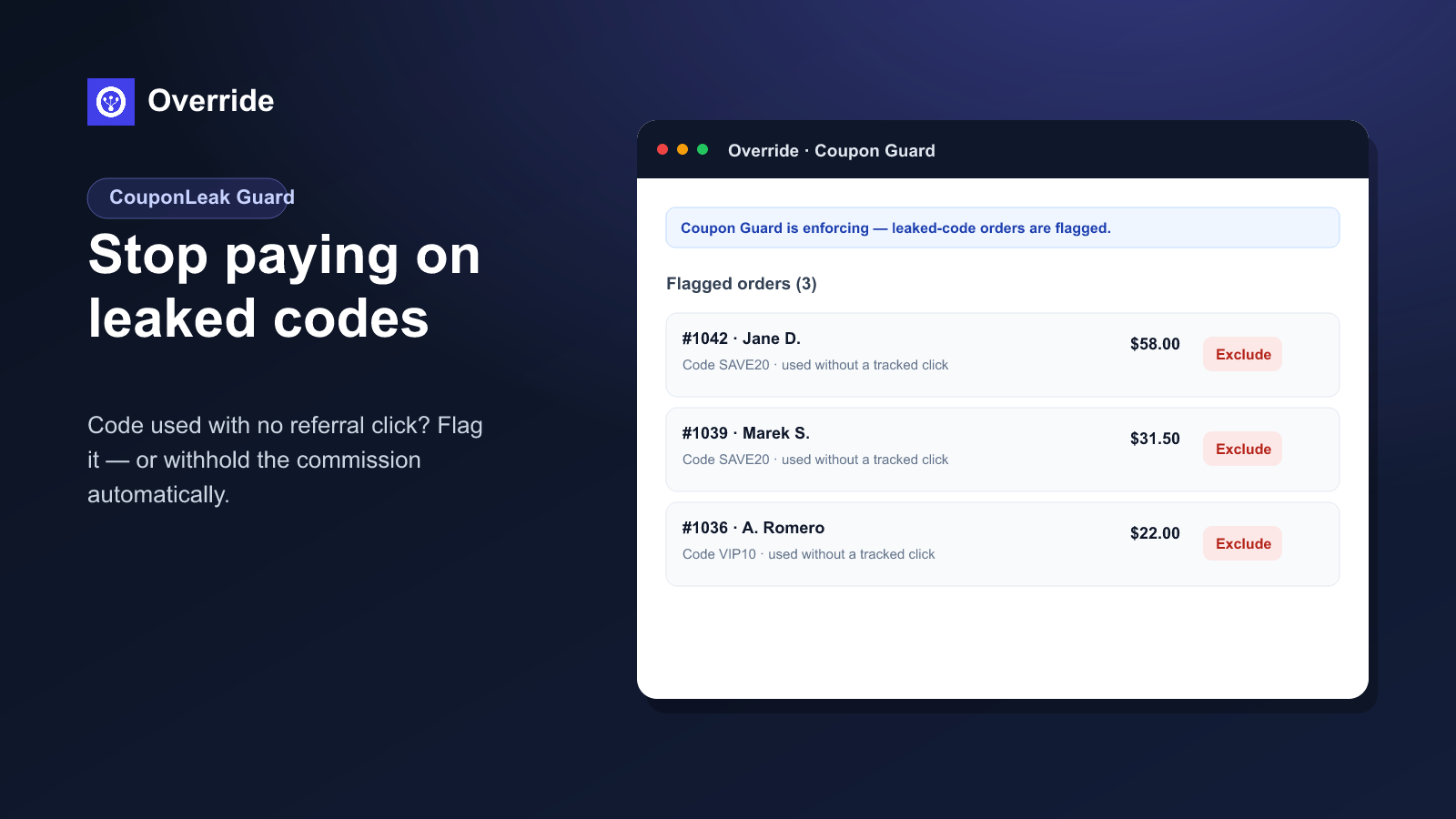
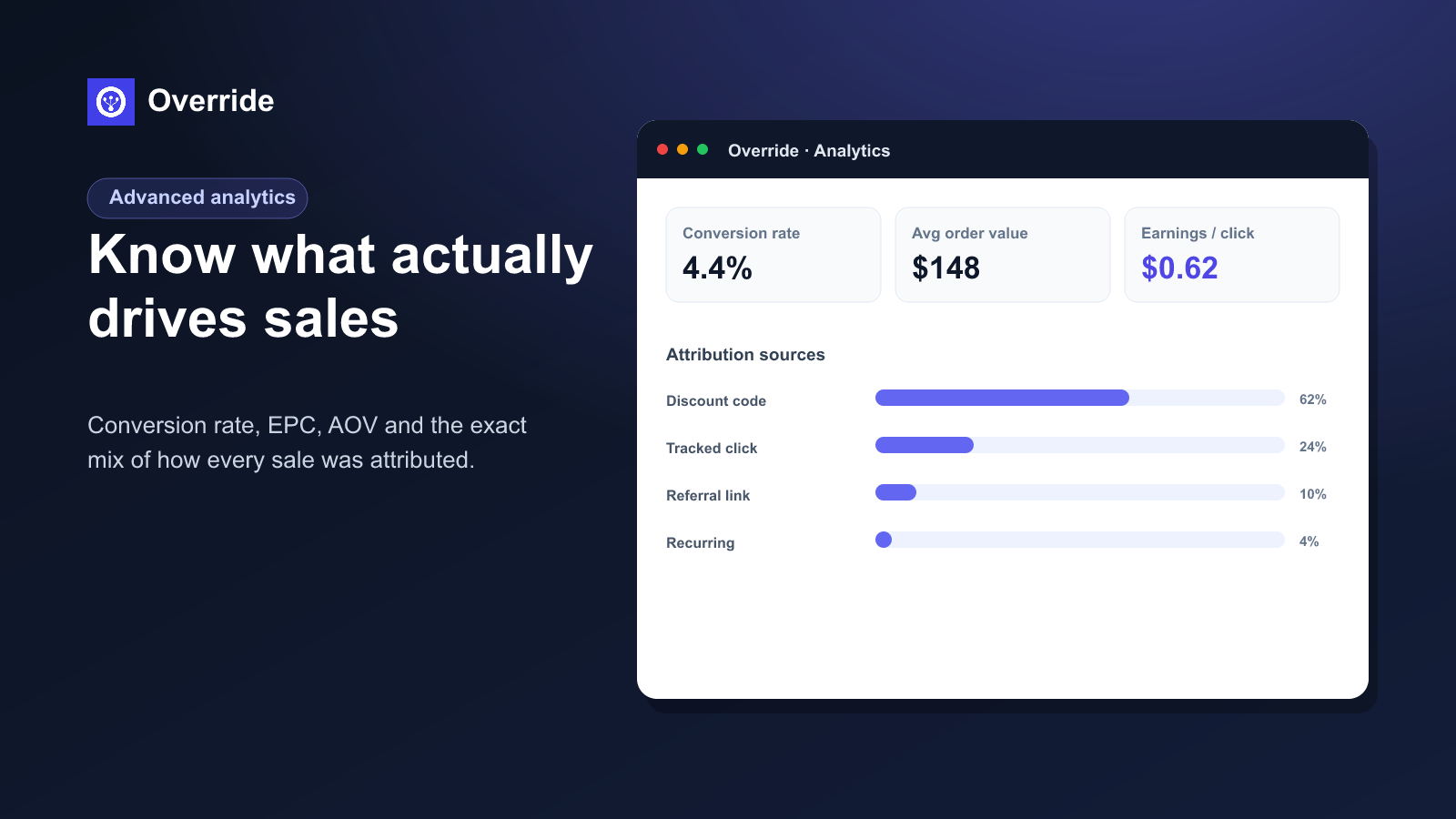
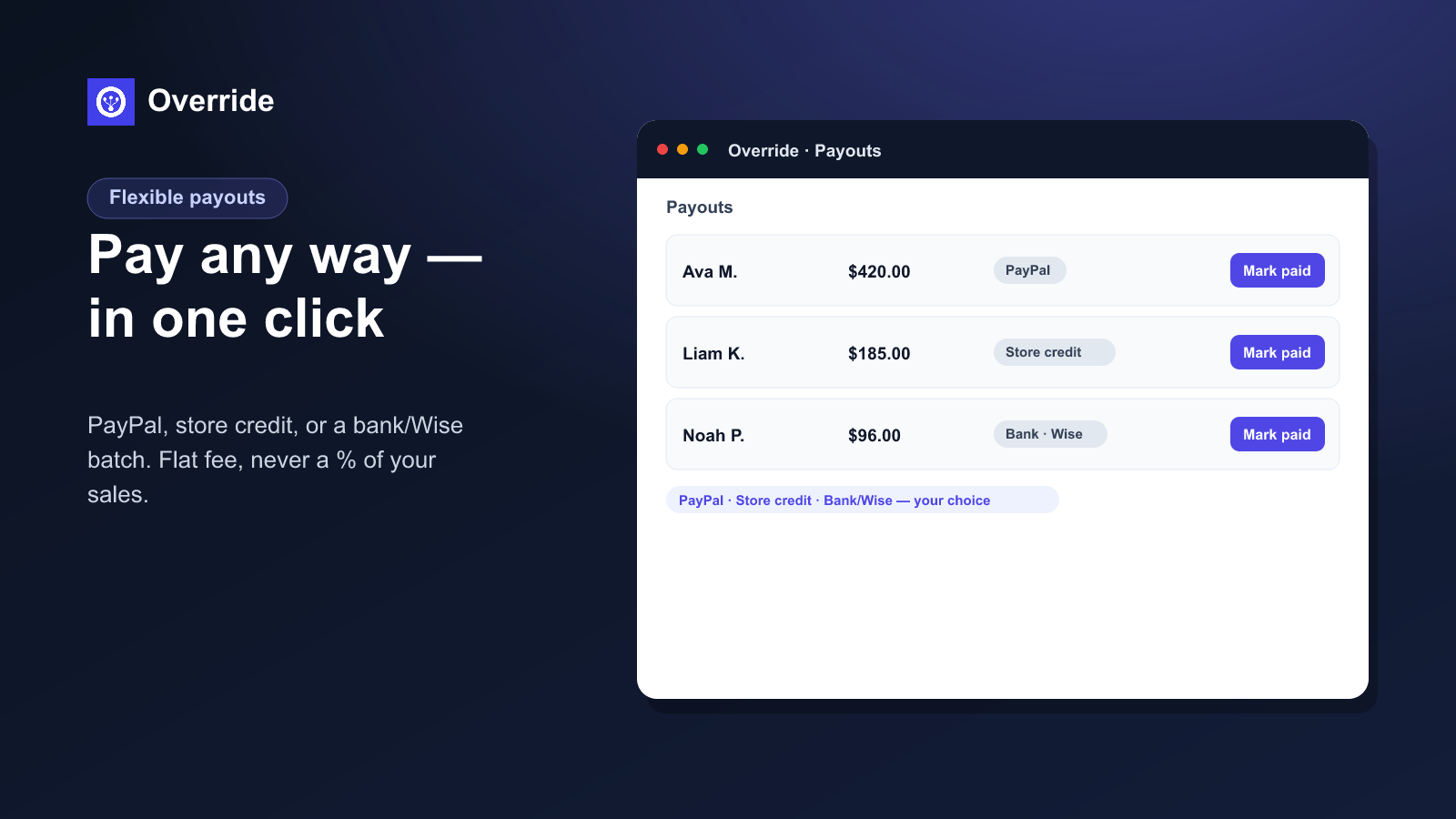
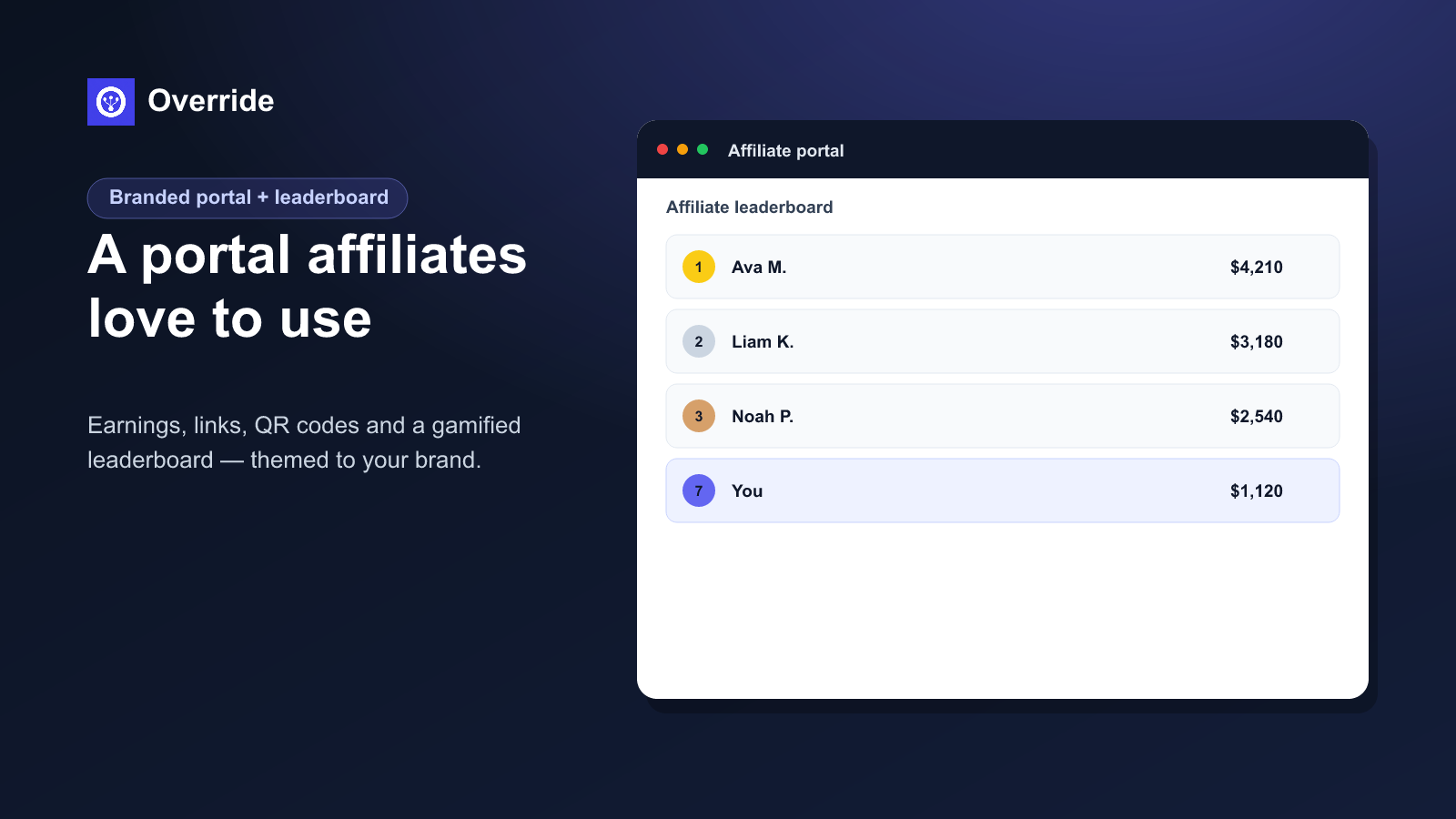
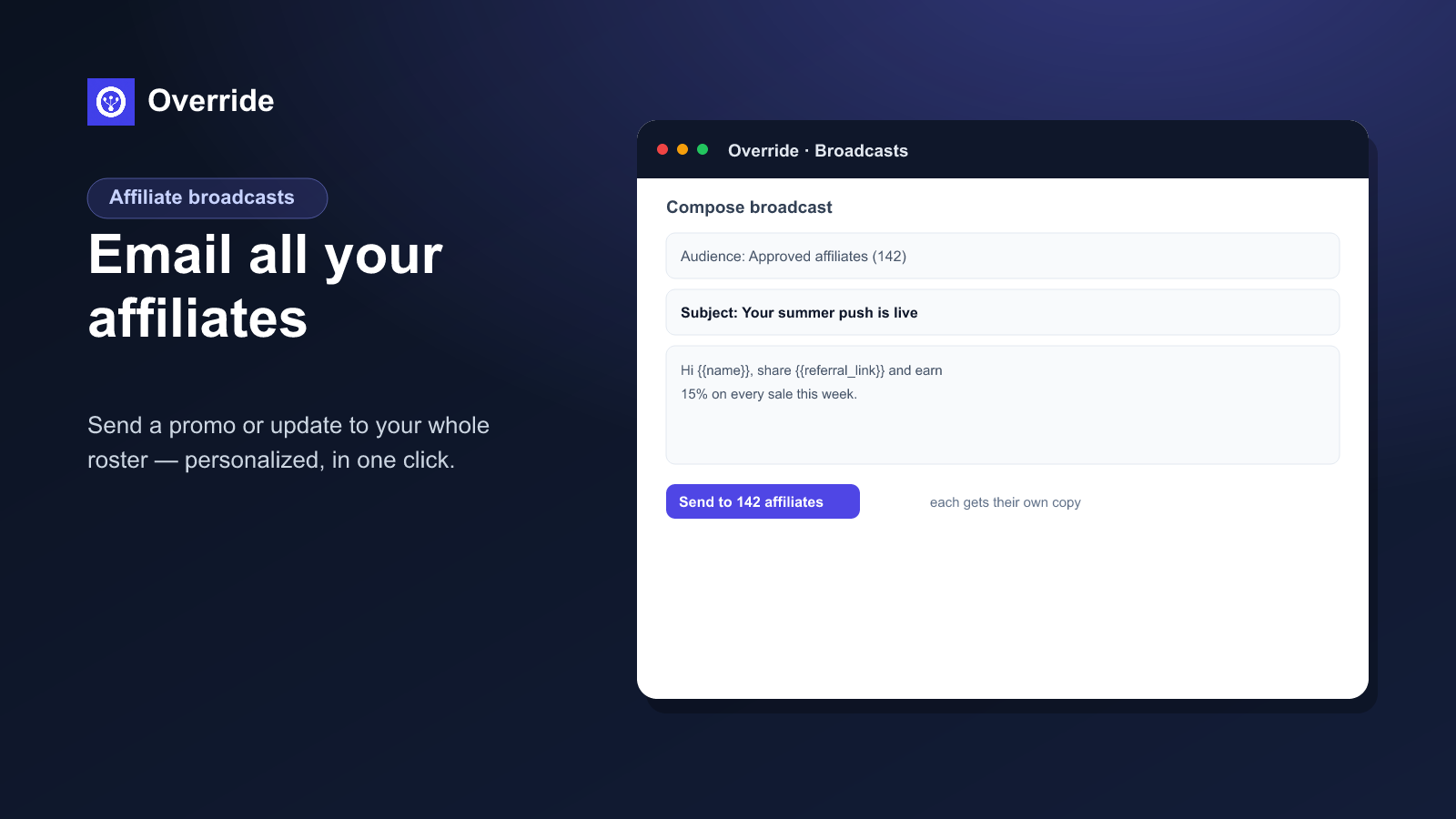
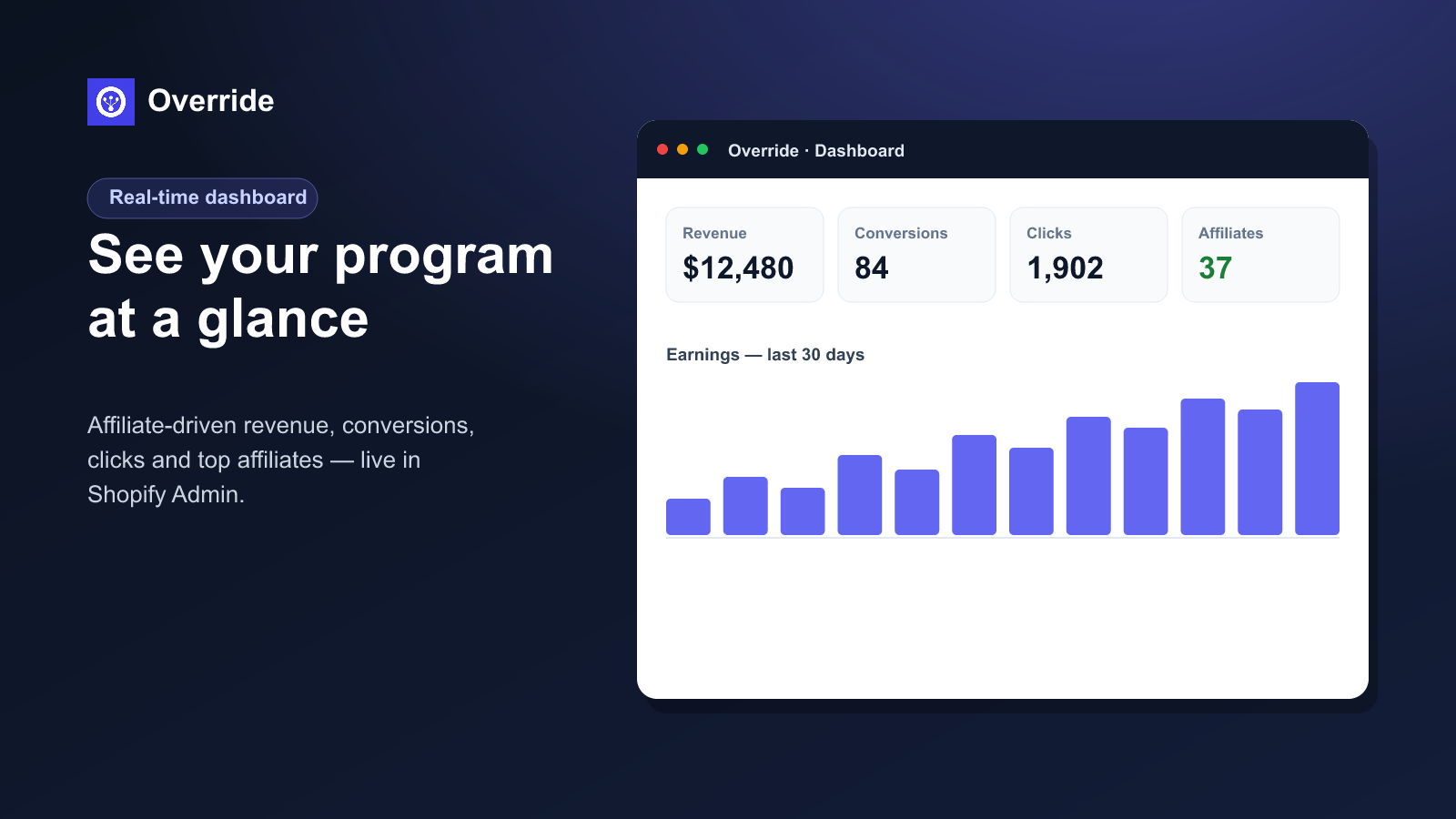
Override — the flat-fee multi-tier affiliate app for Shopify: never a % of your sales, flat fee from $19/moOverride dashboard with affiliate revenue, conversions and earnings chartUp to 10 commission tiers — the deepest multi-tier on ShopifyCouponLeak Guard flagging discount-code orders used without a referral clickRecurring commissions — earn on every repeat orderMilestone bonuses and performance auto-tiersAdvanced analytics: conversion rate, AOV, EPC and attribution sourcesFlexible payouts: PayPal, store credit and bank/WiseBranded affiliate portal with a gamified leaderboardAffiliate broadcasts — email your whole roster, personalizedMulti-campaign tracking with per-campaign linksSwipe-copy asset library with banners and ready-to-paste copyQuick Start checklist and industry templatesDeveloper API, headless conversion tracking and signed webhooks

Keep reading

Guides on running a compliant affiliate program on Shopify.

How to set up an affiliate program on Shopify (2026 step-by-step)

A practical 2026 guide to launching an affiliate program on Shopify: commission structure, attribution, recruiting affiliates, payouts and staying compliant.

Read guide →

Is multi-tier affiliate marketing legal, or is it an MLM?

Multi-tier affiliate programs are legal when they pay on real sales and cap tier depth. Here's the line between affiliate marketing and an illegal MLM/pyramid scheme.

Read guide →

Flat-fee vs revenue-share affiliate apps: what they really cost

Revenue-share affiliate apps take a percentage of every referred sale, so the bill grows as you scale. Here's the real cost vs a flat monthly fee.

Read guide →

Affiliate commission rates by industry (2026 benchmarks)

Typical affiliate commission rates for beauty, supplements, fashion, digital products and creator brands — with sensible multi-tier structures to copy.

Read guide →

Track affiliate sales on headless Shopify (Hydrogen) with an API

Headless and custom storefronts break normal affiliate tracking. Here's how to attribute affiliate sales server-to-server with a conversion API — and sync events with webhooks.

Read guide →

Recurring affiliate commissions: pay affiliates for repeat orders

Recurring commissions reward affiliates when the customers they referred buy again — ideal for subscriptions and repeat-purchase brands. Here's how they work, compliantly and without storing PII.

Read guide →

How to stop affiliate discount codes leaking to coupon sites

Affiliate codes end up on coupon aggregators, and you pay commission on sales you'd have made anyway. Here's how to detect leaked-code abuse and stop paying for it.

Read guide →

How to recruit your first affiliates for a Shopify store

Practical, proven ways to recruit affiliates for a Shopify store — starting with your own customers, an on-site block, an invite email, and a portal that converts.

Read guide →