Affiliate vs influencer marketing: which is right for your Shopify store?
June 5, 2026 · 6 min read
Affiliate marketing and influencer marketing get lumped together because both turn other people's audiences into sales for you. But they're different tools with different economics, and picking the wrong one — or paying for it the wrong way — quietly burns budget. Here's the honest comparison, and how most Shopify stores end up using both.
The core difference: who carries the risk
Influencer marketing is usually paid upfront: you pay a creator a flat fee (or free product) to post, regardless of how many sales it drives. You carry the risk. Affiliate marketing is paid on performance: the partner earns a commission only when they drive a real sale, so they carry the risk. That single difference drives everything else — cost predictability, ROI, and the kind of partner each attracts.
Cost and ROI
- Influencer: fixed cost, uncertain return. Great when it hits, a write-off when it doesn't — and hard to attribute precisely.
- Affiliate: variable cost, self-correcting return. You only pay out of revenue that already happened, so ROI can't go underwater.
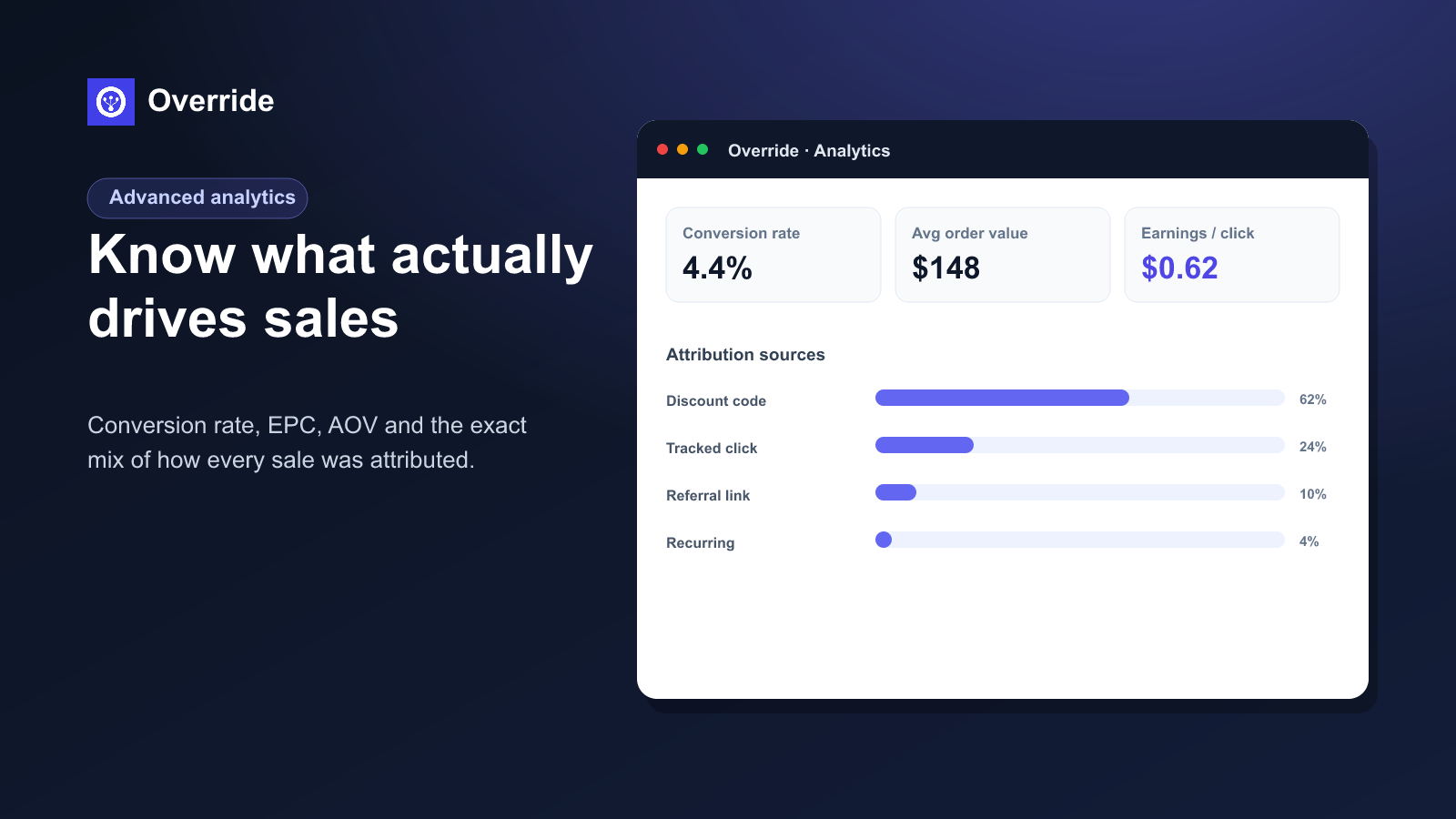
- Measurement: affiliates come with built-in attribution (a unique code + link per partner); influencer posts often don't, unless you give them one.
Where each one wins
Influencers are strong for awareness and launches — a big top-of-funnel splash, social proof, content you can reuse. Affiliates are strong for sustained, measurable revenue — a roster of partners quietly driving sales every month with no upfront spend. One is a campaign; the other is a channel.
You don't actually have to choose
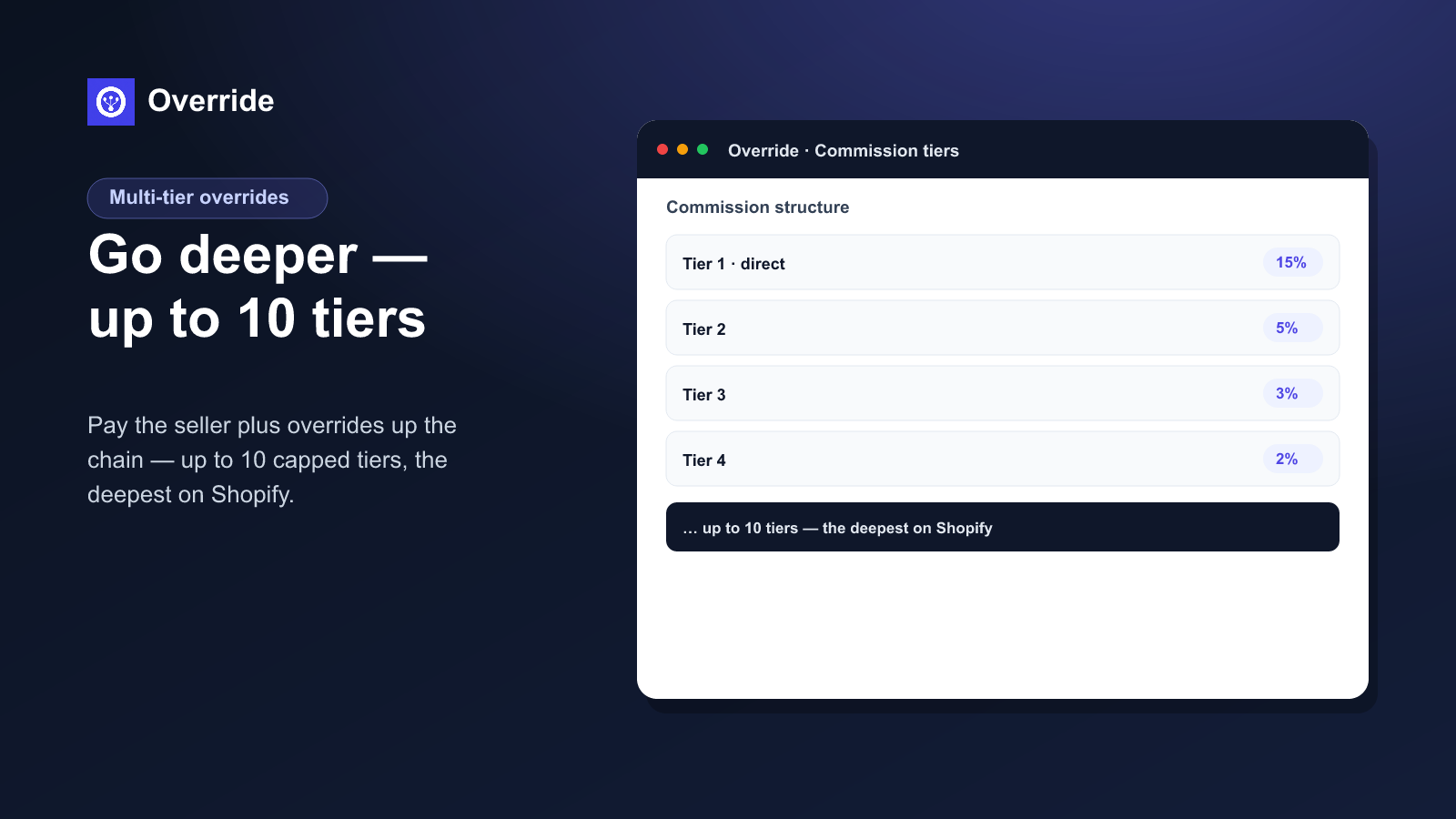
The smart move is to pay influencers as affiliates: give each creator a unique discount code and referral link, and either pay them purely on performance or pair a smaller flat fee with commission. Now every post is tracked, you see exactly which creator drove what, and your best influencers can even recruit other creators for a small override. Influencer reach plus affiliate accountability — without paying twice for sales you'd have made anyway.
Do it with Override
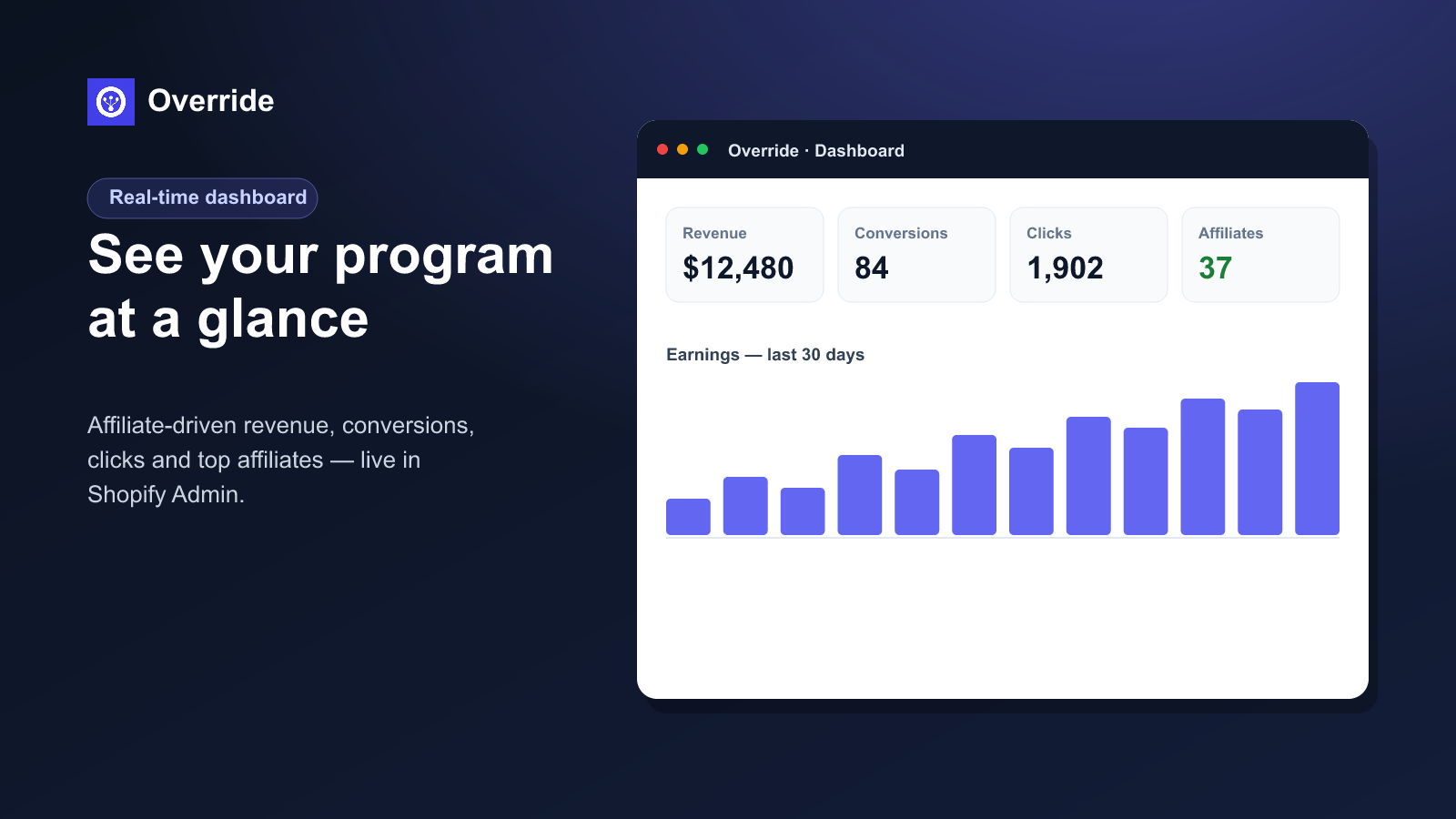
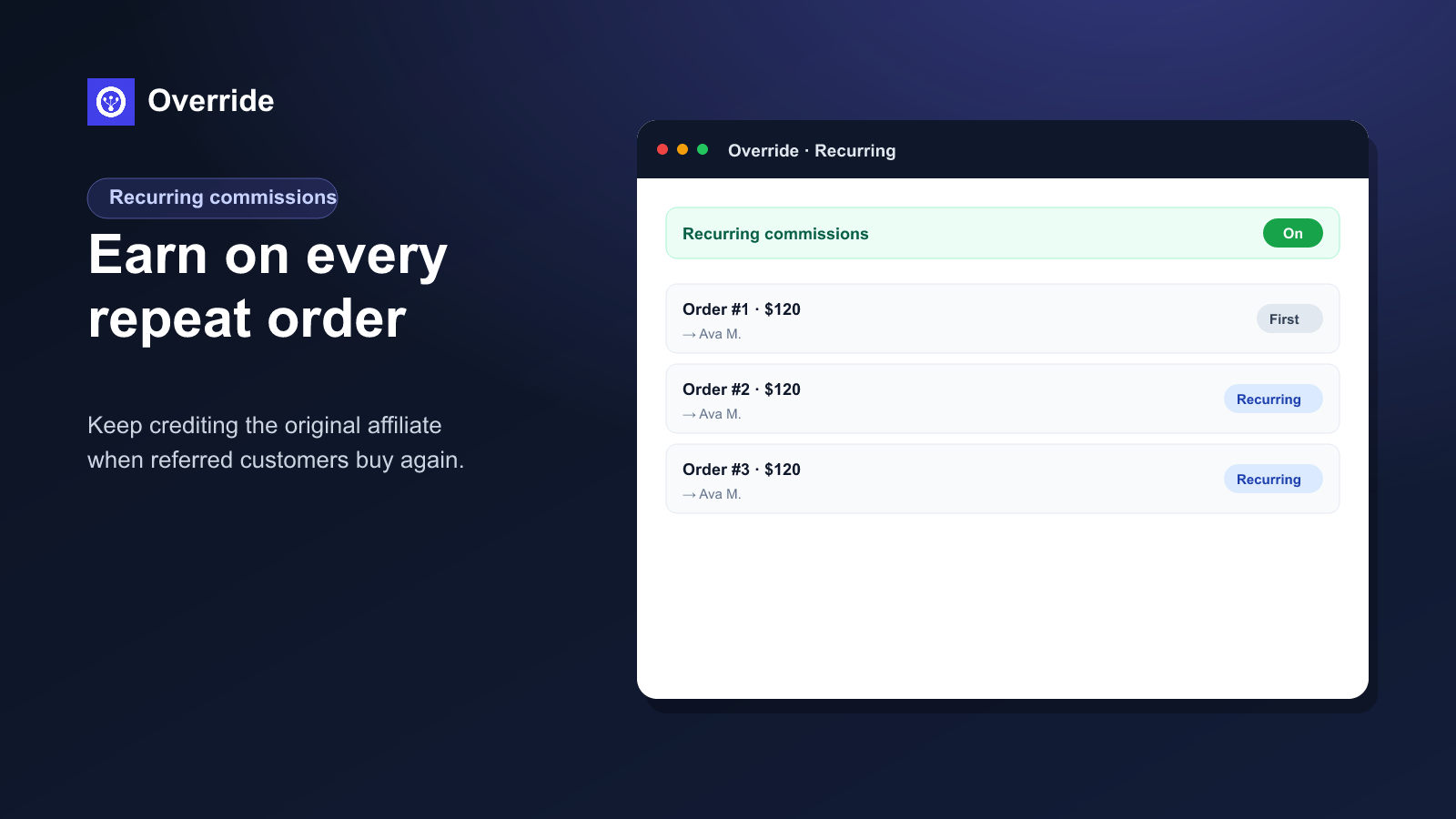
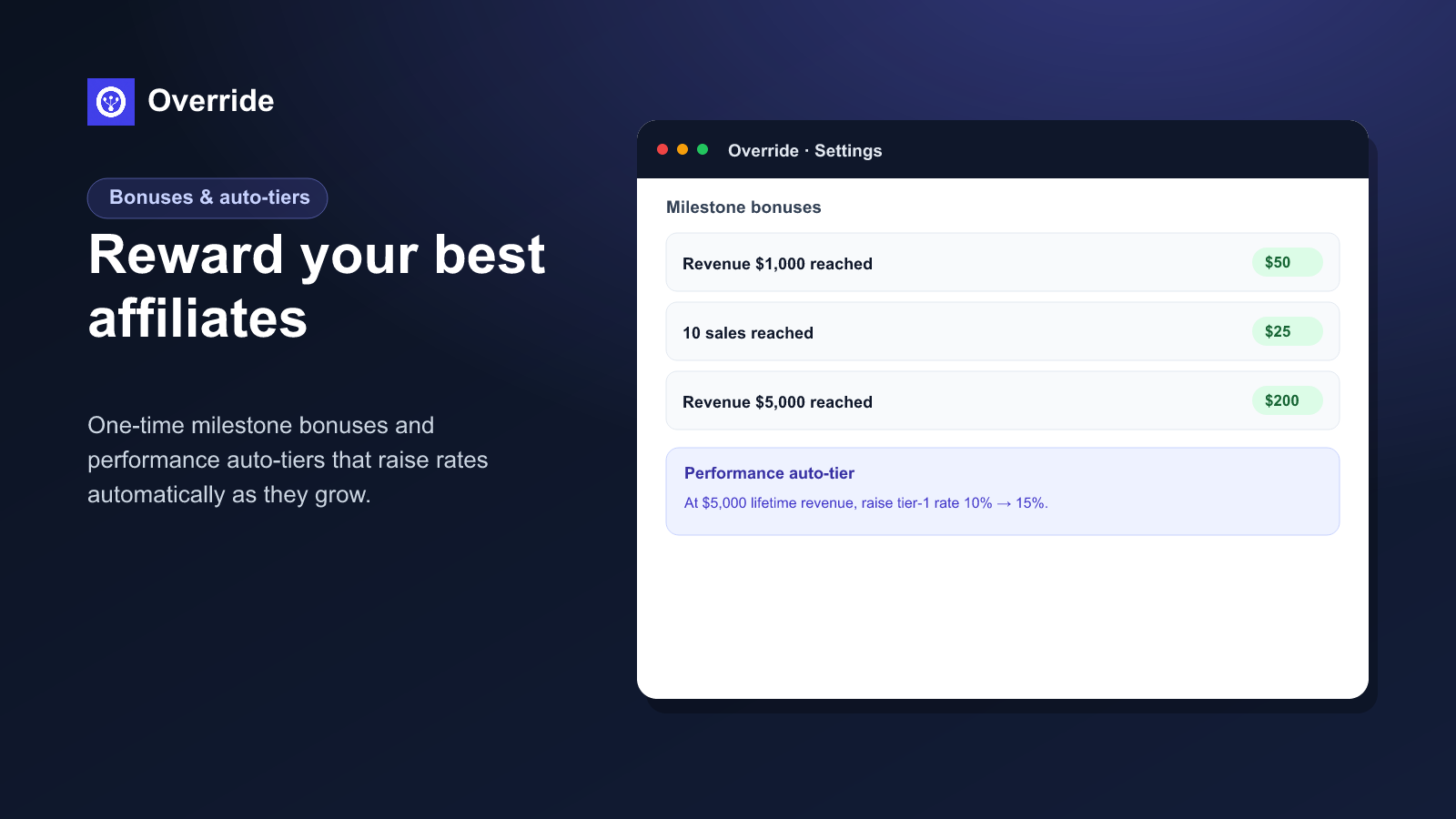
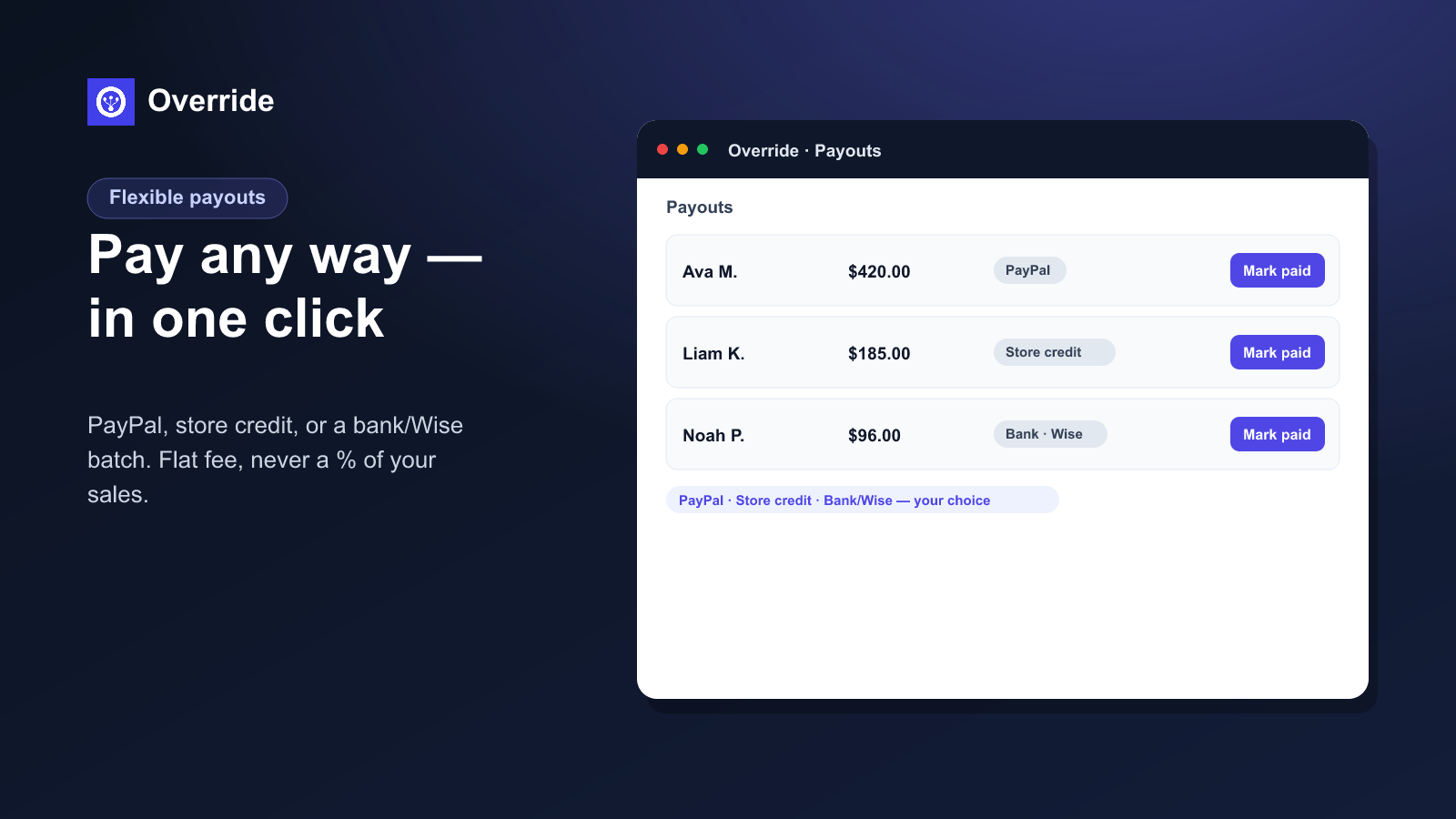
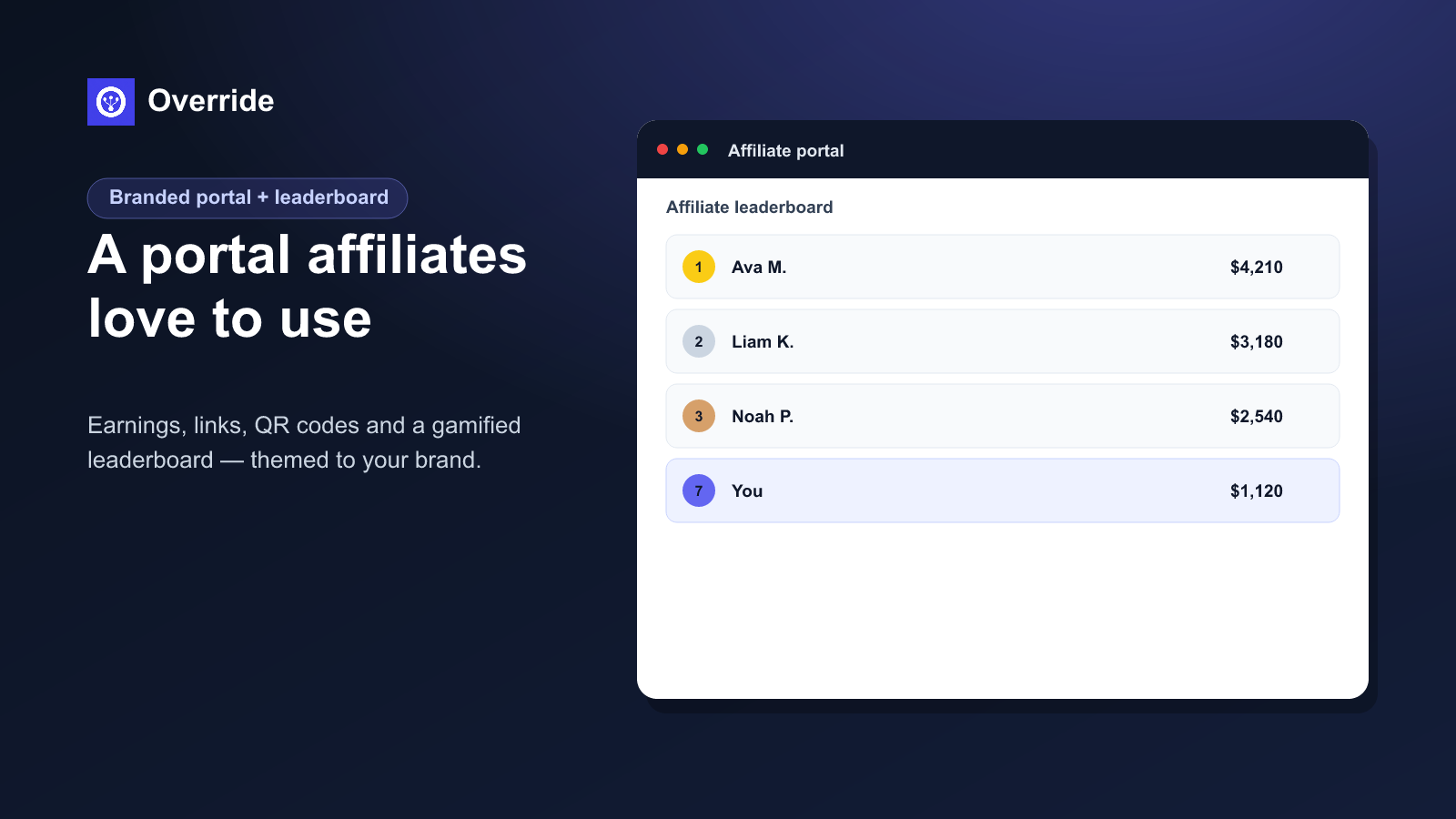
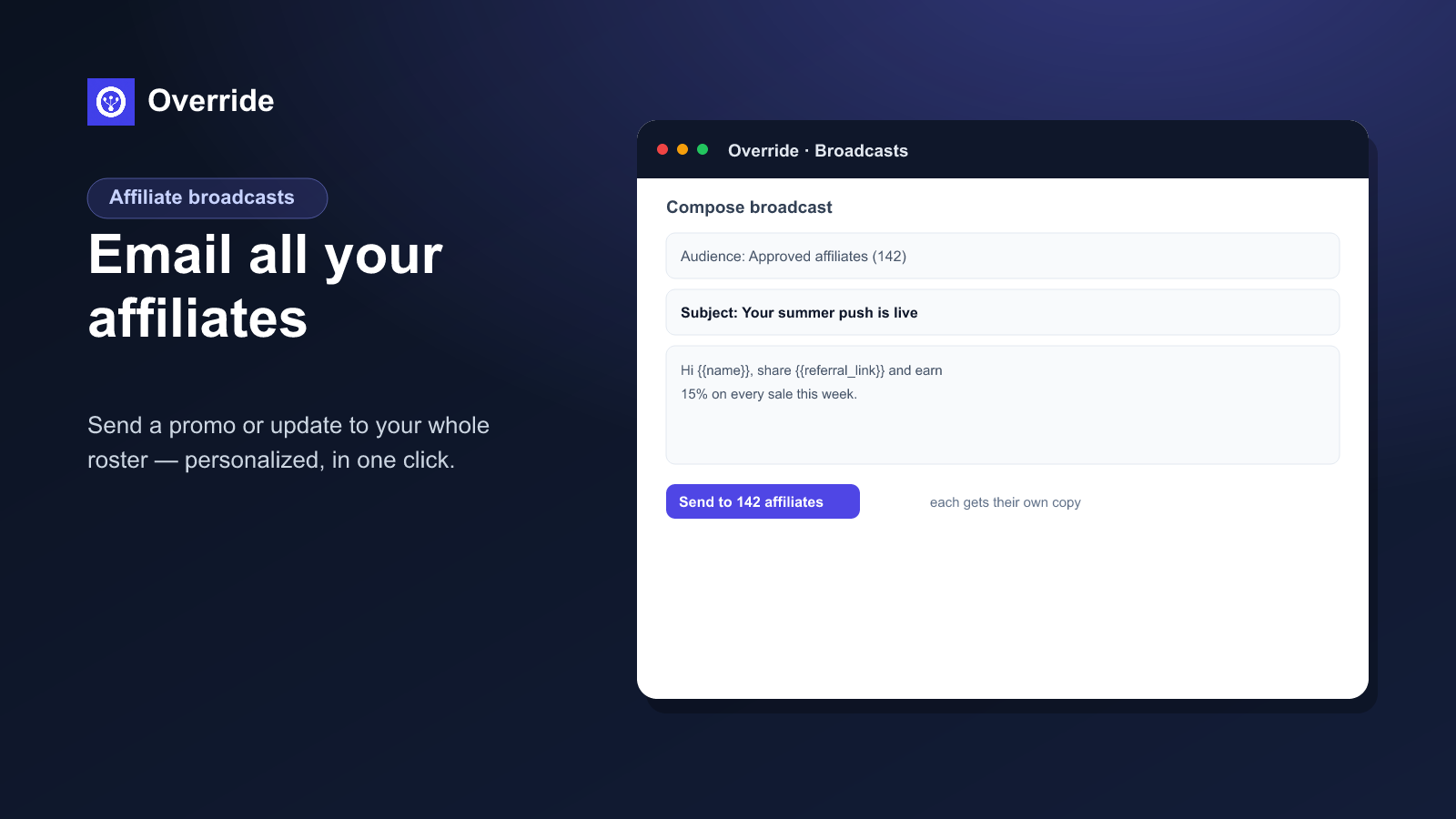
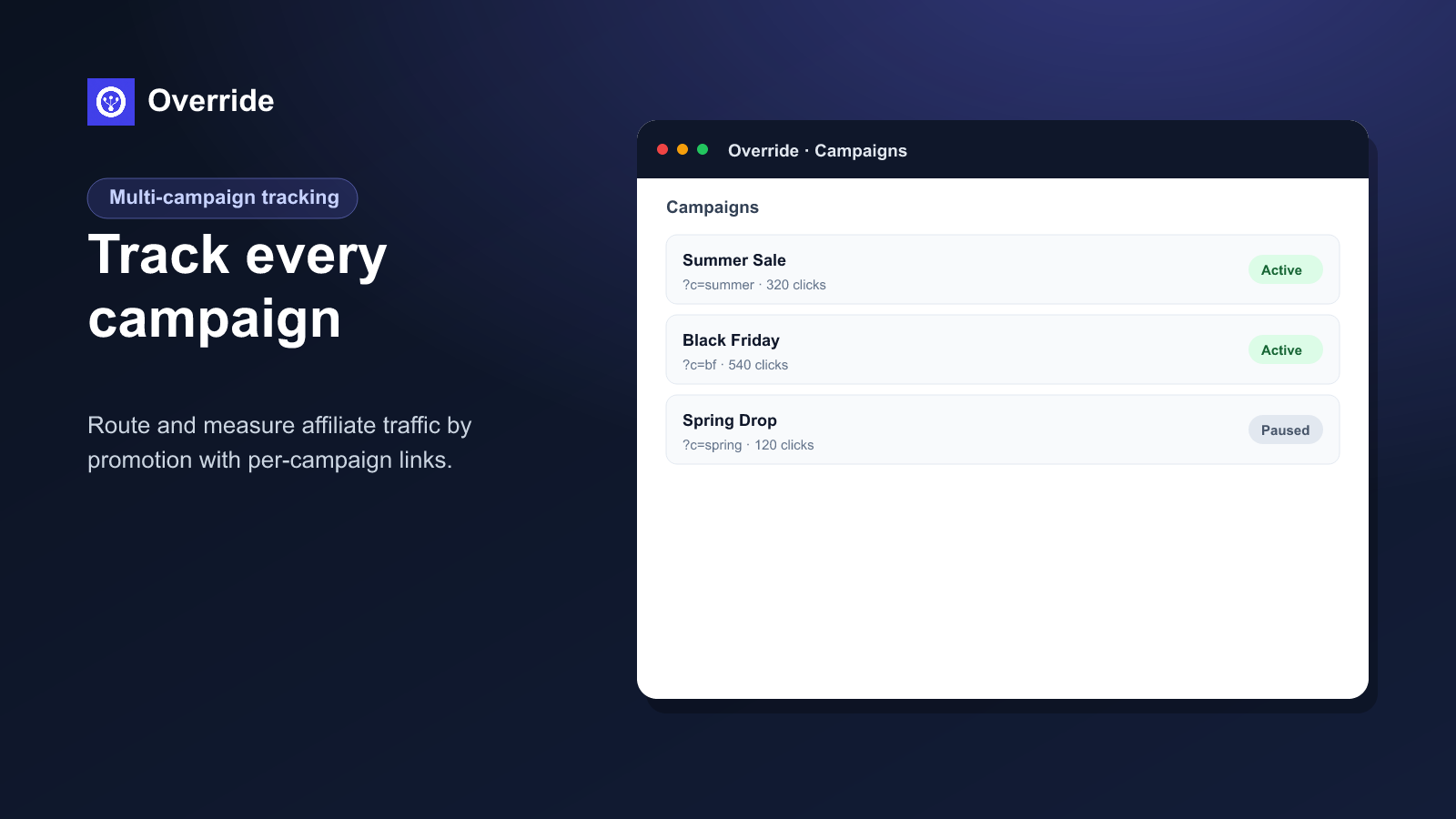
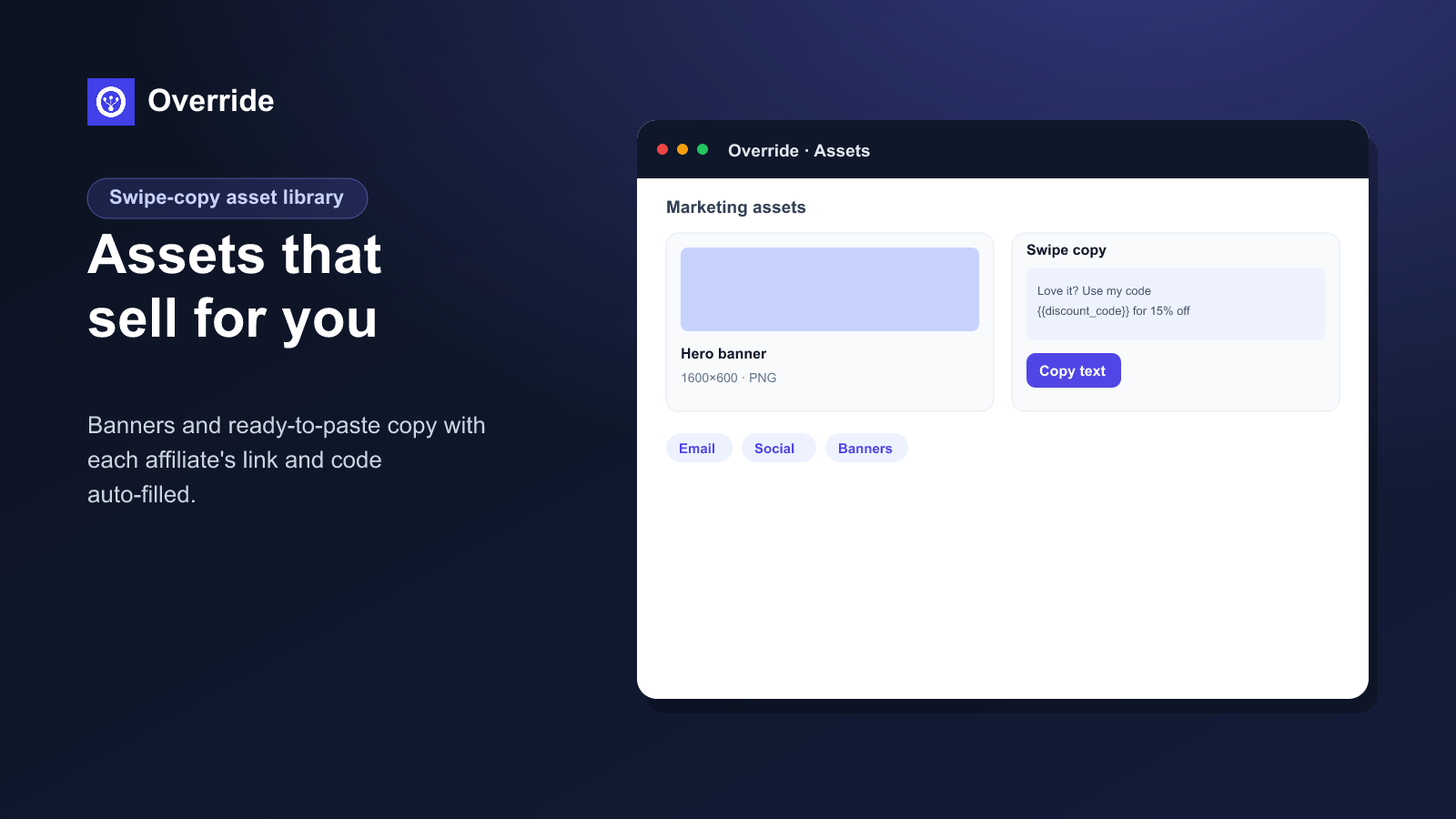
Override turns every creator into a tracked affiliate: code + last-click attribution, recurring commissions, a leaderboard your influencers will compete on, and multi-tier overrides so top creators build a team. It's a flat monthly fee — never a percentage of your sales — so scaling your creator roster never inflates the bill.