The best affiliate commission structure for a Shopify store (with examples)
June 5, 2026 · 7 min read
Your commission structure is the deal you offer partners. Too stingy and nobody promotes you; too generous and you lose money on every sale. The best structure is generous enough to motivate and disciplined enough to stay profitable — and it's built from a few simple levers. Here's how to set each one, with examples you can copy.
Start from your margin, not a competitor's rate
Don't copy a benchmark blindly — work backwards from your gross margin. A useful rule of thumb is to share 20–40% of your margin with affiliates. If you make $40 margin on a $100 product, a 15% commission ($15) is comfortable; a 35% commission ($35) eats almost all of it. Know your number first, then design around it.
Percentage vs flat per-sale
- Percentage of sale (most common): scales with order value, fair across a varied catalog. Always pay on the product subtotal after discounts — never on shipping or tax.
- Flat amount per sale: predictable, good for single-price products, subscriptions or lead-style offers where every conversion is worth roughly the same.
Single-tier vs multi-tier
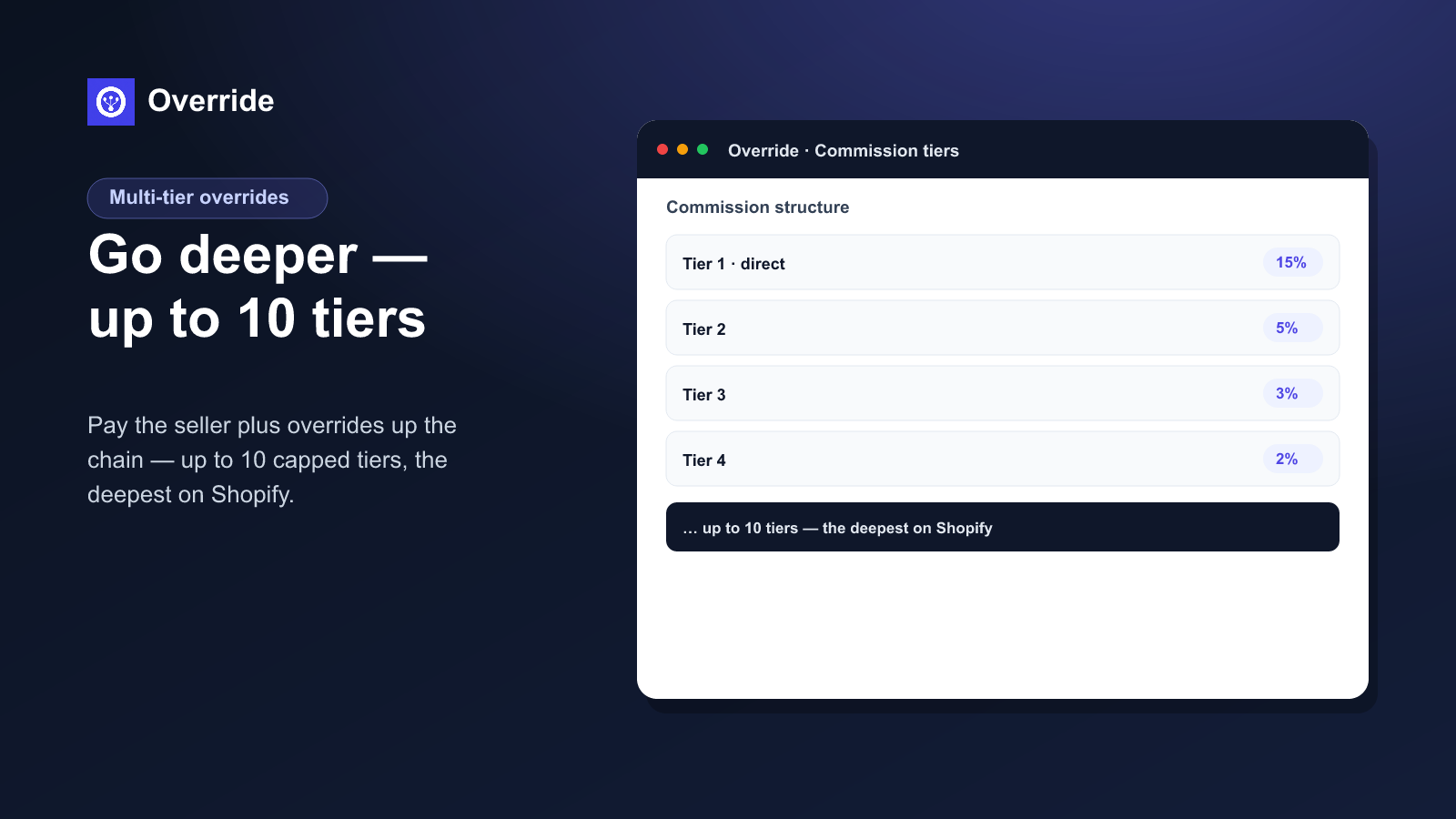
A single-tier rate pays an affiliate on the sales they personally drive — simplest to run. A multi-tier structure adds a smaller override to the partner who recruited them (e.g. 20% direct + 5% to the sponsor), which turns your best affiliates into recruiters and grows the program itself. Keep tier depth capped (a handful of levels) so you stay clearly an affiliate program, not an MLM.
Layer in bonuses and auto-tiers
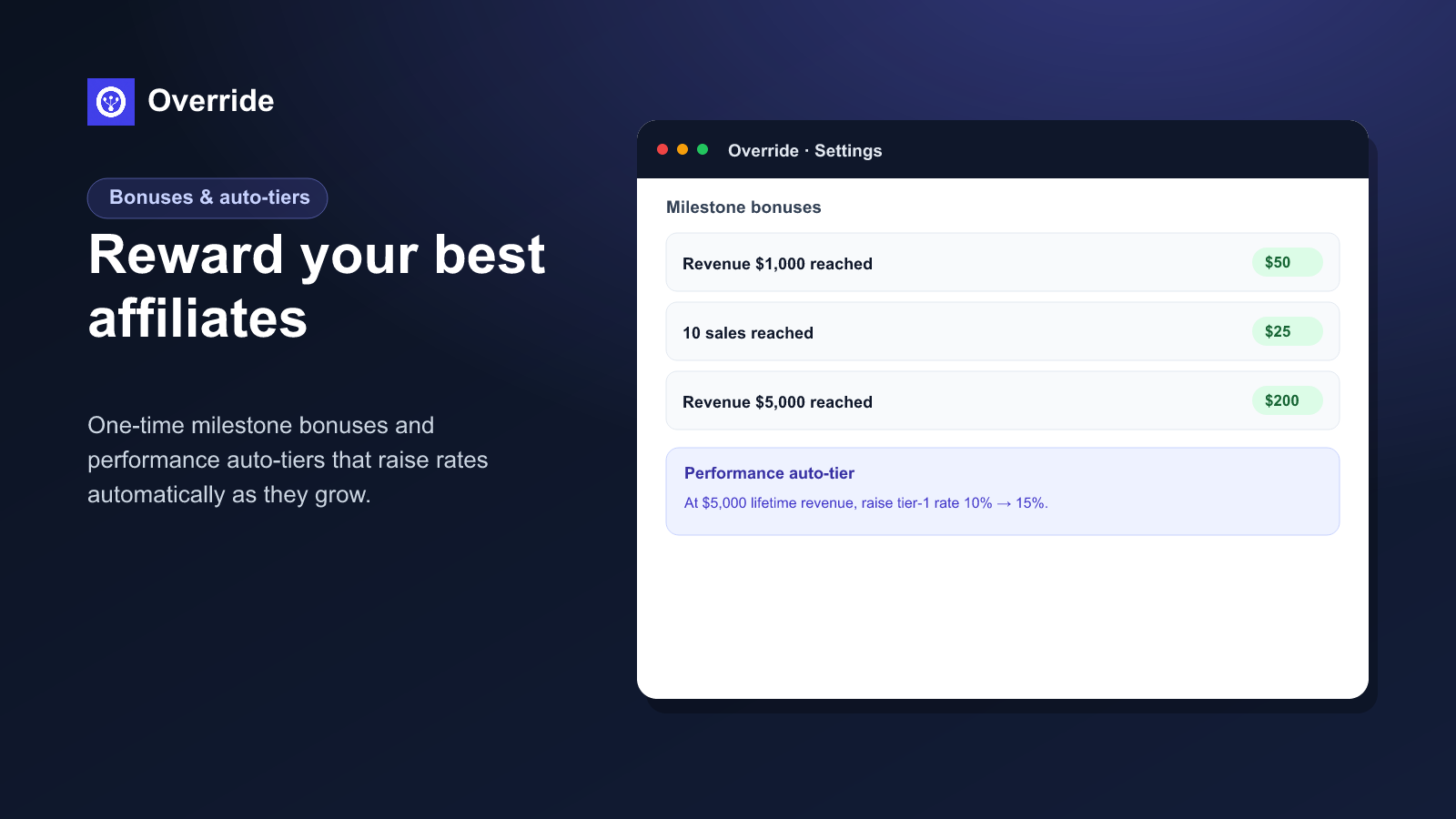
Flat rates are a floor; momentum comes from rewards. A one-time milestone bonus ("$50 when you hit $1,000 in sales") is a cheap, powerful nudge. Performance auto-tiers raise a partner's rate once they cross a revenue threshold, so your top sellers earn more without you renegotiating. Both turn passive sign-ups into active promoters.
Add recurring for repeat-purchase brands
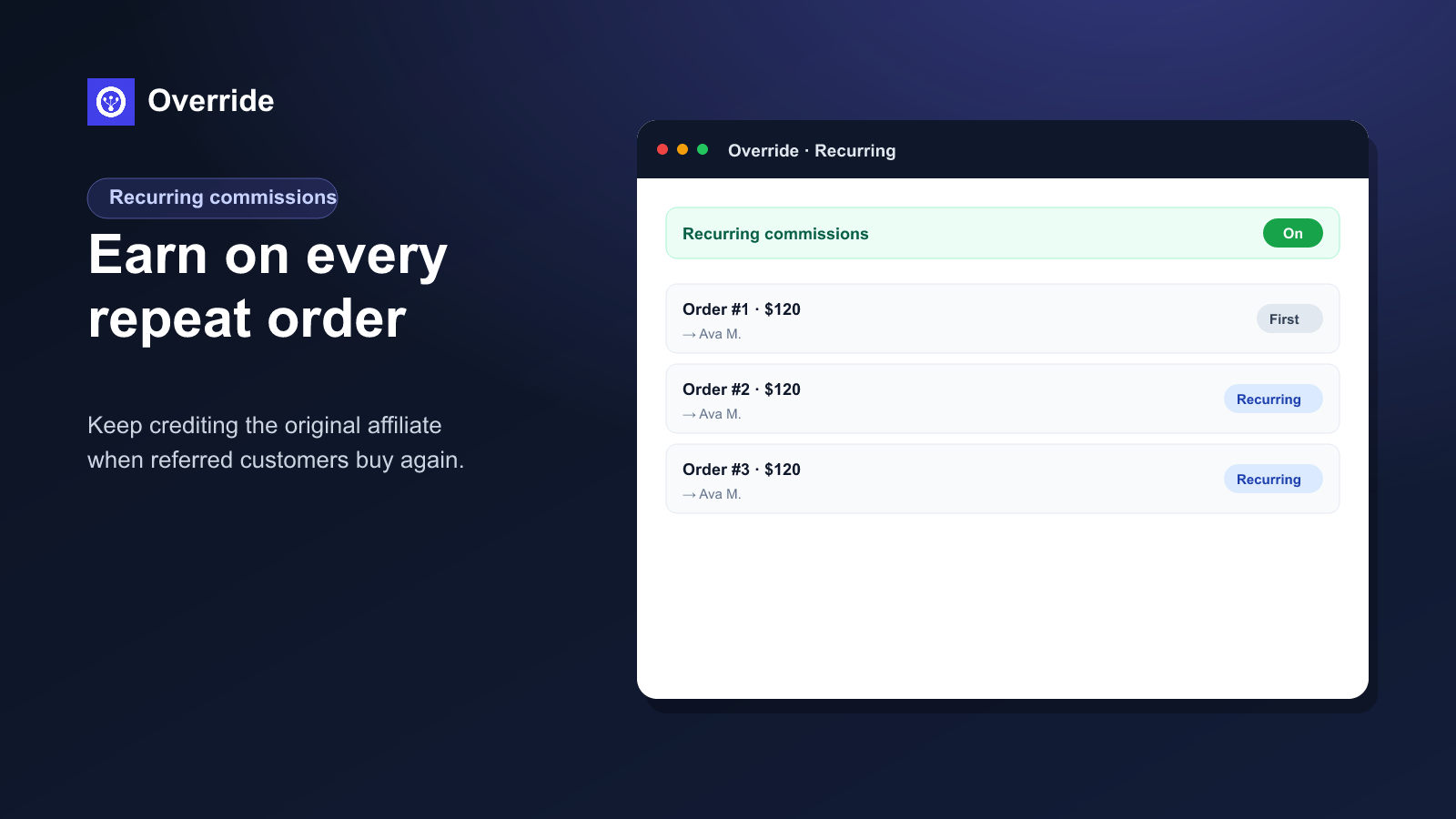
If customers reorder — supplements, coffee, skincare, subscriptions — pay affiliates on those repeat orders too, not just the first. Recurring commissions attract partners who refer customers who actually stick, because they keep earning on the relationship they started.
A worked example
- Supplements brand, ~60% margin: 20% direct + 5% sponsor override, recurring for the customer's lifetime, plus a $50 bonus at $1,000 in sales.
- Apparel brand, ~45% margin: 12% direct + 4% override, a $25 bonus at the first 20 orders, 30-day hold with automatic refund clawback.
- Digital product, ~95% margin: 30% direct + 10% override — you can afford to be the most generous program in the niche.
Mistakes to avoid
- Paying commission on shipping, tax or pre-discount totals — it silently inflates payouts.
- No hold period — you pay out on orders that later get refunded.
- Unbounded tier depth — it drifts toward an MLM and a compliance problem.
- Rates you can't sustain — cutting them later angers partners; start conservative and reward with bonuses.
Build it in Override
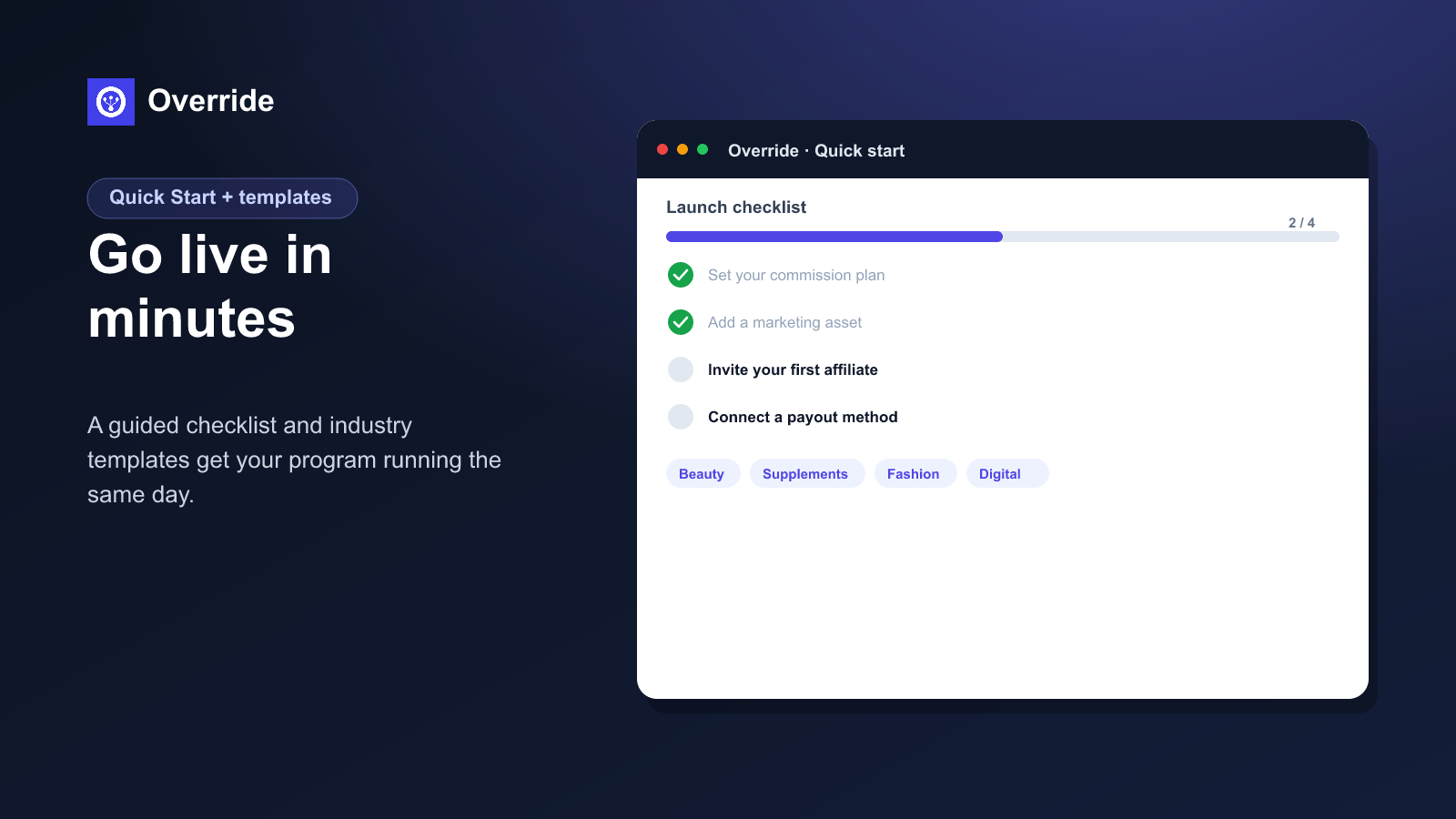
Override gives you every lever in one place — tiered rates, commission base, hold period, milestone bonuses, performance auto-tiers and recurring commissions — plus one-click industry templates so you start from a sensible structure and tweak. Flat monthly fee, never a percentage of your sales.